Written by: Precious Eze
Medically reviewed by: Dr. Deborah Akinlola
Last reviewed: March 21, 2026
Many women notice itching, dryness, unusual discharge, or discomfort and assume it must be poor hygiene, an infection, or a hormone problem.
Sometimes, it’s simpler than that.
Sometimes, a medicine is part of the reason.
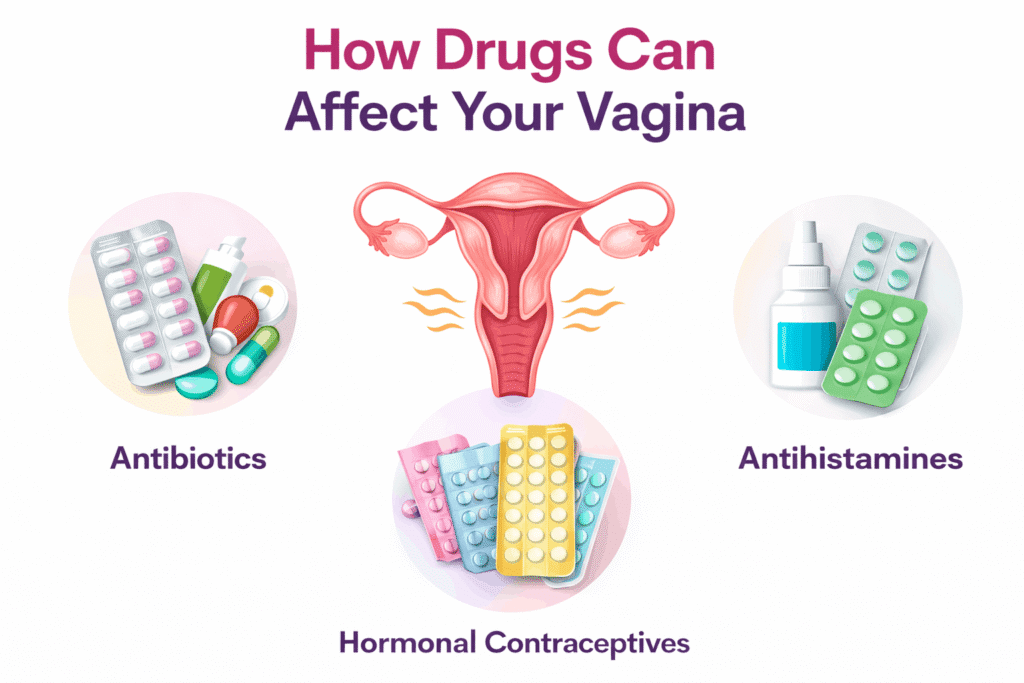
The 3 most common drug groups that can affect vaginal health are antibiotics, hormonal contraceptives, and antihistamines. In some women, these medicines can contribute to yeast infection, vaginal dryness, irritation, burning, soreness, or pain during sex. Antibiotics have the clearest link here because they can disrupt the vaginal balance that helps keep yeast under control, while hormonal contraceptives and antihistamines are more likely to contribute to dryness or irritation in some women rather than affect everyone the same way.
This does not mean every woman will react this way. It also does not mean you should stop an important medicine on your own. But if symptoms started after you began a drug, the timing is worth taking seriously.
Click to Jump
Quick Answer: What Drugs Can Affect Your Vagina?
The 3 common drug categories that can affect vaginal health are:
- Antibiotics
- Hormonal contraceptives
- Antihistamines
These medicines can affect the vagina in different ways. The NHS explains that antibiotics can trigger thrush. ACOG explains that low estrogen can lead to less natural vaginal moisture, which helps explain why some women notice more dryness when hormones shift. And Cleveland Clinic notes that certain medications can contribute to vaginal dryness.
Why Your Vagina Has a Natural Balance
A healthy vagina is not supposed to be scrubbed into “freshness”. It protects itself.
That natural balance depends on:
- healthy bacteria, especially lactobacilli
- a normal acidic environment
- healthy vaginal moisture
When that balance is disturbed, symptoms can follow.
You may notice:
- itching
- burning
- unusual discharge
- dryness
- soreness
- pain during sex
This is why drugs that seem unrelated to vaginal health can still affect how your vagina feels.
1. Antibiotics
Antibiotics are one of the most common medicines linked to vaginal side effects.
They can be very useful when you truly need them. But they can also reduce some of the healthy bacteria that help keep yeast under control. When those protective bacteria drop, yeast can grow more easily.
This is why antibiotics are so often linked with vaginal thrush, also called a vaginal yeast infection. If you want the full breakdown, Can Antibiotics Cause a Yeast Infection? What Women Should Know explains that connection in more detail.
How antibiotics may affect the vagina
Antibiotics may:
- disturb the normal vaginal balance
- reduce protective bacteria
- make it easier for yeast to overgrow
Symptoms to watch for
You may notice:
- intense itching
- soreness
- burning
- thick white discharge
- discomfort during sex
- discomfort when urinating
These symptoms can fit vaginal thrush, but they do not prove thrush on their own. Other vaginal problems can overlap and feel similar.
A real-life point many women miss
This is one reason self-medicating with antibiotics can backfire. You may take them for one problem and end up triggering another.
It’s also why timing matters so much. If symptoms started during or soon after a course of antibiotics, that pattern is worth mentioning to a doctor.
2. Hormonal Contraceptives
Hormonal contraceptives can affect women differently.
Some women use them without any vaginal symptoms. Others notice dryness, irritation, or more vaginal discomfort after starting a hormonal method.
This may include:
- contraceptive pills
- injectables
- implants
- some hormonal devices
The key point is to stay precise. Hormonal contraceptives do not automatically harm vaginal health. But in some women, hormone shifts can affect lubrication, tissue comfort, and the vaginal environment. It’s the reason this section is less about “birth control always causes infections” and more about paying attention to new dryness, irritation, or recurring symptoms that began after a hormonal change. Can Birth Control Cause a Yeast Infection? gives you a clear insight if you want a closer look at this pattern.
How hormonal contraceptives may affect the vagina
In some women, hormonal changes may:
- reduce natural lubrication
- make vaginal tissues feel drier
- increase irritation
- contribute to pain during sex
- make existing discomfort more noticeable
Symptoms to watch for
You may notice:
- vaginal dryness
- irritation
- pain during sex
- a tight or uncomfortable feeling
- recurrent discomfort
If symptoms started soon after a new contraceptive method, that timing is important. It doesn’t prove the medicine is the cause, but it does make the link worth checking.
3. Antihistamines
Antihistamines are commonly used for:
- allergies
- sneezing
- hay fever
- itching
- skin reactions
- runny nose
Common examples include loratadine, cetirizine, chlorpheniramine, and diphenhydramine.
These medicines are often known for drying effects. That is why some people notice dry mouth, dry eyes, or a dry nose while taking them. In some women, this same pattern may also show up as vaginal dryness or extra friction during sex. Cleveland Clinic notes that certain medications can contribute to vaginal dryness, and ACOG explains that dryness can irritate vaginal and vulvar tissues and make sex painful. If that sounds familiar, Can Antihistamines Cause Vaginal Dryness? goes deeper into what that dryness can feel like and what to do about it.
How antihistamines may affect the vagina
Antihistamines may:
- reduce moisture across mucous membranes
- leave vaginal tissue feeling drier
- increase friction during sex
- make existing dryness feel worse
Symptoms to watch for
You may notice:
- vaginal dryness
- discomfort during sex
- irritation
- a dry or tight feeling
- more friction than usual
This can feel even worse if you already tend to deal with dryness.
Bonus: Metronidazole Can Confuse the Picture
Metronidazole is worth mentioning because it often causes confusion.
MedlinePlus explains that metronidazole is used to treat certain vaginal infections, including bacterial vaginosis. But if you develop new itching, discharge, or irritation after treatment, do not assume it means the original problem never went away. ACOG explains that vaginal symptoms can have different causes, and different conditions can overlap or feel similar. If you are trying to make sense of symptoms that showed up after treatment, Can Metronidazole Cause a Yeast Infection? can help you understand what may be going on.
Is It Dryness, Thrush, or Something Else?
This is where many women get stuck.
Not every vaginal symptom means the same thing.
Thrush often causes:
- itching
- soreness
- burning
- thick white discharge
Dryness is more likely to feel like:
- friction
- tightness
- irritation
- discomfort during sex
- a dry or less lubricated feeling
Other vaginal conditions may cause discharge, odor, burning, irritation, or pain too. That’s why guessing can be risky. ACOG explains that yeast infection, bacterial vaginosis, and other vaginal conditions can overlap in symptoms. Its vaginitis guidance also notes that itching, burning, odor, and discharge can happen across different causes.
A simple rule helps here:
- if the main issue is thick discharge and itching, think about thrush
- if the main issue is friction, tightness, and pain during sex, think about dryness
- if symptoms keep returning, smell unusual, or do not match either pattern clearly, get checked
Signs a Medicine May Be Affecting Your Vaginal Health
A medicine may be affecting your vagina if symptoms begin after you start using it.
Watch for:
- unusual vaginal discharge
- itching
- burning
- dryness
- soreness
- pain during sex
- repeated thrush
- irritation that keeps returning
The timeline matters.
If symptoms started after a new drug, that is a clue worth paying attention to.
What to Do if a Drug Is Affecting Your Vagina
Do not stop prescribed medication without medical advice.
Instead, take these steps.
1. Track when the symptoms started
Write down when you started the medicine and when the symptoms began.
Also note whether the symptoms:
- come and go
- keep returning
- got worse after treatment
- feel more like dryness than discharge
- happen mostly during sex
This timeline can help a doctor spot a pattern faster.
2. Do not assume every symptom is an infection
This is important.
Not every vaginal symptom is thrush. Similar symptoms can happen with bacterial vaginosis, skin irritation, sexually transmitted infections, or hormone-related dryness. That is one reason self-treatment does not always work.
3. Stay hydrated
If the medicine has a drying effect, staying hydrated may help a little. It won’t fix every cause, but it’s still a sensible step.
4. Use a water-based lubricant if dryness is the problem
If dryness is the main issue, a water-based lubricant can reduce friction and make sex more comfortable. ACOG notes that lubricants can help when sex is painful because of dryness.
5. Avoid harsh vaginal products
Skip:
- scented soaps
- douches
- perfumed washes
- deodorizing products
These can make irritation worse. The NHS advises avoiding soaps, shower gels, and douching around the vagina when thrush is suspected.
6. Wear breathable cotton underwear
This can help reduce irritation and support comfort, especially if you already feel sore or itchy.
7. Speak to your doctor or pharmacist
They may help you figure out whether:
- the medicine is a likely trigger
- the symptoms suggest infection, dryness, or something else
- you need treatment
- another medicine or approach may suit you better
When to See a Doctor
See a doctor if:
- it is your first time having these symptoms
- symptoms keep coming back
- treatment is not helping
- the discharge smells bad
- you have pelvic pain
- you have sores or bleeding
- sex has become painful
- you are pregnant and think you may have an infection
You should also get checked if you’re not sure whether the problem is thrush, BV, irritation, or dryness. Symptoms can overlap, and treating the wrong thing can waste time and make the problem more frustrating. The NHS advises medical review if it’s your first time having thrush symptoms, treatment has not worked, or symptoms keep returning.
FAQ
Yes. Some medicines can affect the vagina by changing healthy bacteria, reducing moisture, or shifting the vaginal environment.
No. Many women take antibiotics without getting thrush. But antibiotics can raise the risk in some women because they may reduce the healthy bacteria that help keep yeast under control.
They can in some women. Antihistamines are known for drying effects, and some women notice that dryness in vaginal comfort too.
No. Do not stop prescribed medicine on your own. Speak to a doctor or pharmacist first so they can help you work out the cause and the safest next step.
Final Takeaway
Your vagina is a delicate system, and some common medicines can throw off its natural balance.
The main ones to know are:
- antibiotics
- hormonal contraceptives
- antihistamines
In some women, these drugs can contribute to thrush, dryness, irritation, burning, and discomfort during sex.
The goal isn’t to fear medicine. It’s to understand how your body responds.
When you know that a drug may be affecting your vaginal health, you are more likely to spot the signs early, avoid unnecessary self-medication, and get the right help faster.
Medical Disclaimer: This article is for educational and informational purposes only and is not a substitute for professional medical advice, diagnosis, or treatment. Always speak with a qualified healthcare professional about personal health concerns.