
Vaginal yeast infection is something many women have dealt with. But they don’t always like to talk about it. In fact, research suggests that 5% of healthy Nigerian women suffer vaginal yeast infection at least 4 times annually.
While that percentage is around 1.5 million women, many of these women don’t even know they’re suffering from vaginal yeast infection. Most of them often call every discomfort they feel “down there” toilet infection. As long as it comes with that “sweet” itch. But the truth is, most of the time, it’s actually a vaginal yeast infection.
What Exactly is a Vaginal Yeast Infection?
A vaginal yeast infection is also known as candidiasis. It is caused by an overgrowth of a fungus called Candida albicans.
Believe it or not, this same type of yeast lives naturally in and on different parts of everyone’s body, both male and female. But in small, healthy amounts.
Mouth and Throat: Candida lives in the oral cavity and throat. But as mentioned above, in a smaller amount.
Intestines: Candida commonly lives in the digestive tract. Here, it helps with digestion and nutrient absorption in healthy people.
Skin: Yes, even on the skin. Candida and Malassezia are species of yeast found on the skin. They’re found around the groin, armpits, and even under the breasts. These are places that are naturally sweaty and warm, giving the species a comfy environment.
Vagina: Candida lives in the vagina in a delicate balance with a type of bacteria called Lactobacillus. This particular bacteria, also known as, “good bacteria”, helps maintain the vagina’s pH balance. It also prevents the Candida from overgrowing. So both Candida and Lactobacillus work in balance to keep the vagina generally healthy.
But a problem arises when this delicate balance is disturbed. This causes the yeast to multiply quickly. Its growth leads to irritation, discharge, and that famous itching.
Common Causes of Vaginal Yeast Infection
The truth is: it’s not always due to bad hygiene. And contrary to what many people believe, vaginal yeast infection is NOT a sexually transmitted disease. However, several other factors can trigger an overgrowth:
- Antibiotics: These kill the good bacteria that keep yeast in check. And when the balance is tilted, the growth of the yeast spikes, causing vaginal yeast infection.
- Hormonal Changes: Pregnancy, ovulation, or using birth control pills; even the normal changes that occur during your menstrual cycle. Generally, anything that throws your hormones off balance can disturb the Candida in your system.
- Diabetes: High sugar levels in the body provide “food” for the yeast. It helps the yeast grow and multiply if the diabetes is left untreated or unmanaged.
- Weakened Immune System: If you’re stressed or recovering from illness. Having diabetes can also weaken your immune system.
Other Factors that can Increase Your Risk of Vaginal Infection:
Using scented soaps, sprays, tampons and even deodorants. “V-washes” or douches that disrupt the natural pH.
Wearing clothes that are too tight
Staying in wet clothes for long
Is Vaginal Yeast Infection Contagious?
Vaginal yeast infection is generally not contagious. But while it’s not an STI, it can still be transmitted through vaginal or anal sex; even through oral sex. It is very rare to pass it to a male partner. But he can still be infected, causing him irritation. It is easier for a female partner to get it.
Toilet Infection is Not Vaginal Yeast Infection
In Nigeria, many people believe you contract yeast infections from sitting on a dirty public toilet. This is not true. While you should always be careful in public restrooms for general hygiene, vaginal yeast infections are not usually transmitted through toilet seats. And vaginal yeast infection is NOT the same as toilet infection. Vaginal yeast infection is caused by internal imbalances of natural fungus as we have explained above, while toilet infection is mostly caused by bacteria (E. coli). Calling vaginal yeast infection a “toilet infection” often leads to unnecessary shame.
Symptoms of Vaginal Yeast Infection
There are a number of other conditions that affect the vagina. These conditions have symptoms similar to those of vaginal yeast infection. So how do you know it’s yeast and not something else?
- Itching: Intense itching or burning in or around the vagina.
- The Discharge: Thick, white discharge that looks like “spoilt milk” or pap. It usually doesn’t have a strong bad smell.
- Redness & Swelling: The area around your vulva and vagina will look red and inflamed.
- Burning: You’ll feel a burning sensation especially when you’re peeing or during “the other room” activities.
As mentioned above, there are conditions with similar symptoms. So it’s very necessary to go for a medical checkup to know exactly what the problem is and what you’re treating.
Why is Vaginal Yeast Infection Common in Africa?
Living in a tropical climate like ours comes with unique challenges:
- Heat and Humidity: Yeast loves warm, damp places. Nigeria’s heat makes us sweat more “down there”.
- Tight Clothing: Wearing tight jeans or non-breathable leggings traps moisture.
- Diet: High-carb diets (plenty of bread, sugar, and soft drinks) can sometimes contribute to frequent recurrences.
Effective Treatments & Home Remedies of Vaginal Yeast Infection
The good news is: vaginal yeast infection is very treatable.
Medical Treatments
- Antifungal Medications: These medications treat vaginal yeast infections by preventing the yeast from overgrowing. Topical medications are applied on the outer area of your vagina, known as vulva. Or they are inserted into the vagina itself (e.g., Clotrimazole, Miconazole).
- Oral Tablets: A single dose of Fluconazole is often prescribed by doctors.
The treatment plan to be followed should be by the prescription of your doctor, based on your symptoms and how serious the infection is. Do your best to finish the medication so the infection doesn’t come back.
Also, avoid sex while treating vaginal yeast infection. It can cause more irritation and burning. And don’t even try to use a condom. Some antifungal medications can weaken some elements used in condoms.
Home Remedies: Dos and Don’ts
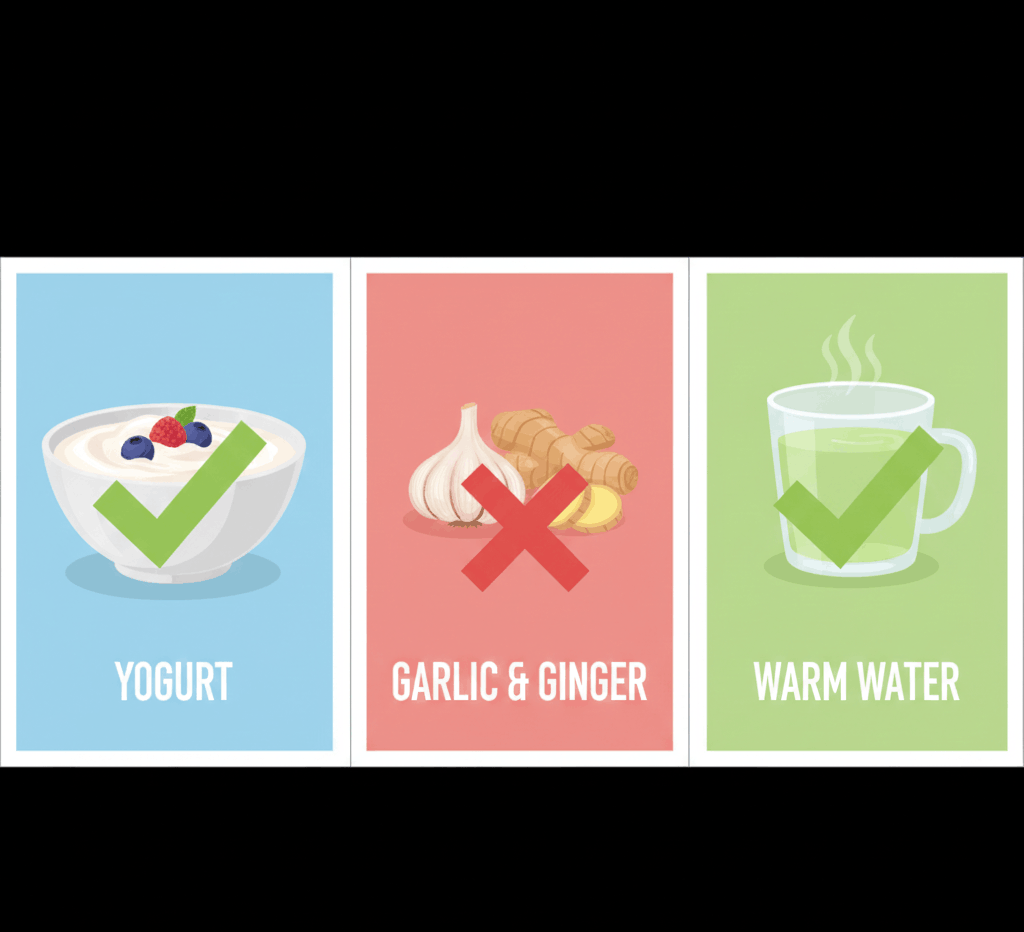
- DO eat Yogurt/Probiotics: Unsweetened yogurt contains Lactobacillus, which helps restore the balance that was lost.
- DON’T put garlic or ginger inside your vagina: Please keep the spices away. Putting food items in your vagina can cause severe chemical burns and make the infection worse.
- DO use warm water: Only wash the outside with plain, clean water.
How Long Does a Vaginal Yeast Infection Last?
Vaginal yeast infection heals after a few days. It can take a full week, nonetheless; as long as you take your drugs and not miss a day. Although there are some severe cases that may take longer to treat. More severe cases may last longer and take longer to treat. Be patient and take your drugs as prescribed. Make sure you finish it. You’ll definitely be alright.
Will the Infection Heal On its Own?
Unfortunately, no. A vaginal yeast infection cannot heal on its own. Only the drugs made for the fungus can treat a vaginal yeast infection.
When to See a Doctor
If this is your first time experiencing these symptoms, don’t self-medicate. Meaning, don’t prescribe and take drugs all by yourself. You need to be sure it’s not a Bacterial Vaginosis (BV) or an STI, as those require different treatments. Also, see a doctor if:
- You are pregnant.
- The infection keeps coming back (more than 4 times a year).
- Your symptoms don’t improve after 3-5 days of treatment.
Prevention Tips
You can prevent vaginal yeast infection by making certain changes in your lifestyle. We offer a few tips below:
- Wear Cotton: Wear 100% cotton underwear. It allows the skin to breathe.
- Dry Properly: After bathing or using the toilet, make sure the area is dry before putting on clothes.
- Wipe Front to Back: Always. This prevents bacteria from the “back” getting into the “front”.
- Avoid Douching: The vagina cleans itself. Don’t wash inside of it with scented soaps. And don’t try to deep your finger inside. Douching can kill the “good bacteria” that maintains the balance in your vagina.
- Avoid Vaginal Sprays: Avoid using vaginal sprays to make it smell nice. It tips the pH balance.
- Change Out of Wet Clothes: If you go to the gym or get caught in the rain, change out of damp clothes immediately.
- Water-Based Lubes: Use water-based sexual lubricants during “the other room” activities.
- Avoid Scented Pads: Do not use scented pads or tampons.
- Blood Sugar: Do your best to maintain a healthy blood sugar level. And if you have diabetes, manage the level properly.
Conclusion
Dealing with a yeast infection can be frustrating, but it doesn’t make you “dirty” or “careless”. It’s a common fungal infection that most women face at least once in their lifetime. By understanding your body and choosing breathable fabrics, you can keep the itch at bay and stay comfortable. Stay healthy, and don’t be shy to speak to a doctor about it.