Written by: Martins Cornelius
Medically reviewed by: Dr. Henry Oliver
Last reviewed: April 30, 2026
Most beginners should take 2 to 3 rest days a week. It’s a safe starting point for most people because your body needs time to recover between workouts, especially when exercise is still new. The CDC’s physical activity guidance for adults recommends regular weekly activity and at least 2 days of muscle-strengthening work. But that doesn’t mean you need to train hard every day.
For beginners, a simple plan usually works best: do your harder workouts on 2 to 3 days a week, then leave room between them for recovery. On some of those non-training days, you can still do light movement like walking, gentle stretching, or mobility work. Hospital for Special Surgery explains that recovery days help your body repair and can even feel better when they include easy movement instead of total inactivity.
Click to Jump
Quick Answer
If you’re a beginner, aim for:
- 2 to 3 workout days a week
- 2 to 3 rest days a week
- light activity on some other days if you feel good
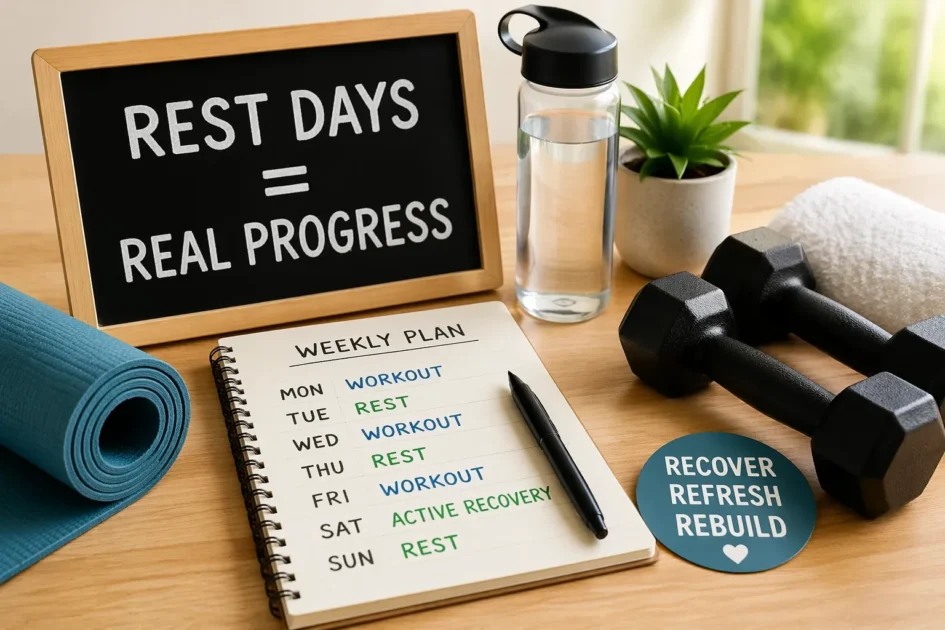
A simple week could look like this:
- Monday: workout
- Tuesday: rest or easy walk
- Wednesday: workout
- Thursday: rest
- Friday: workout
- Saturday: light activity
- Sunday: rest
This kind of schedule is practical, repeatable, and easier to recover from.
Why beginners need rest days
Rest days aren’t wasted days. They’re part of progress.
When you work out, especially when you do strength training, your muscles and energy systems need time to recover. This recovery is part of how your body adapts. You might want to read about What Happens to Your Muscles When You Work Out? How They Repair and Grow. The workout is the signal. Recovery is part of the response.
Rest also helps lower the risk of doing too much too soon. Hospital for Special Surgery’s guide to overtraining notes that poor recovery can lead to extra fatigue, lingering soreness, and a drop in performance. This is especially relevant for beginners who are still learning how much exercise they can handle well.
How many rest days should beginners actually take?
For most beginners, 2 to 3 rest days a week is a strong starting point.
Some people may do well with 1 full rest day and 1 or 2 lighter recovery days, while others may need a little more space at first. There’s no perfect number for everyone. But there’s a practical range, and most beginners fall inside it.
You may need more rest if:
- your workouts leave you sore for several days
- you’re returning to exercise after a long break
- your sleep is poor
- your workouts feel very intense
- your job is physically demanding
- you feel tired before the workout even starts
You may be okay with slightly fewer full rest days if:
- your workouts are short and moderate
- you recover well
- you mix harder days with easier days
- your non-training days are light, not intense
When in doubt, it’s usually better to start with a little more recovery and adjust later.
Full rest day vs active recovery day
A lot of beginners think every day has to be either a hard workout or a complete day off. It doesn’t.
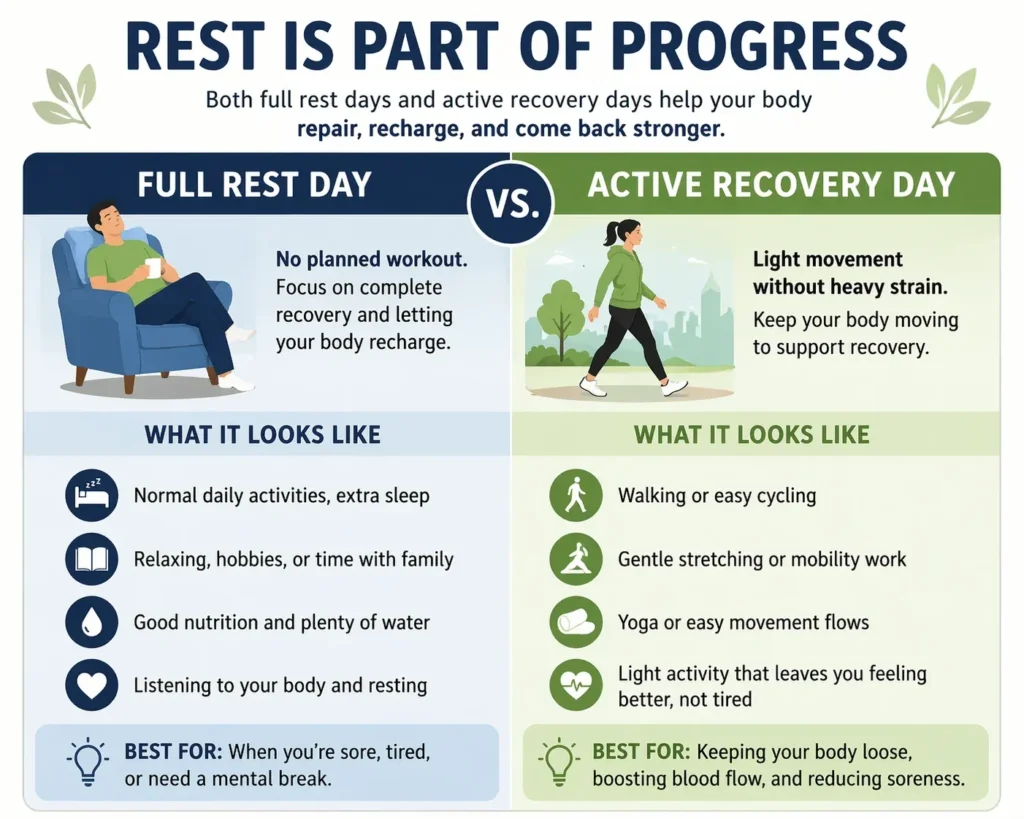
| Type | What it means | Good examples |
|---|---|---|
| Full rest day | No planned workout | Normal daily activity, extra sleep, relaxed recovery |
| Active recovery day | Light movement without real strain | Walking, gentle cycling, mobility work, easy stretching |
This difference helps because not every day needs to be intense. Hospital for Special Surgery notes that active recovery can help with soreness and range of motion, which makes it useful between harder sessions.
Can beginners work out every day?
Most beginners should not do hard workouts every day.
You can move your body every day if some of that movement is easy. But daily hard training is usually not the best starting point. Your body needs time to adapt, and recovery helps make your routine sustainable. The NHS exercise guidance supports spreading activity across the week rather than treating every day like a max-effort session.
How Often Should Beginners Work Out? is a read that can help you decide how often you should train.
A common mistake beginners make
One of the biggest beginner mistakes is thinking that rest means you’re falling behind.
It’s easy to assume that more workouts always mean faster progress. But for beginners, doing too much too soon often leads to extra soreness, inconsistent training, and burnout. A routine only works if you can recover from it and keep doing it next week.
It’s one reason rest days help progress instead of slowing it down. The goal is not to squeeze in the highest number of workouts. The goal is to build a routine you can actually sustain.
How to tell if you need more rest
A rest day is probably a good idea if:
- soreness is getting worse instead of better
- your performance is dropping
- you feel unusually drained
- your sleep is off
- your mood is low
- your joints hurt
- you dread every workout because your body still feels beaten up
If you’re dealing with normal post-workout soreness you might want to know why you’re sore after working out. And if you’re unsure whether you should train through it, Should I Work Out When Sore? can help you decide.
A good weekly rest-day schedule for beginners
Here are a few simple options.
Option 1: Very beginner-friendly
- Monday: full-body workout
- Tuesday: rest
- Wednesday: full-body workout
- Thursday: rest
- Friday: full-body workout
- Saturday: easy walk or stretching
- Sunday: rest
Option 2: Moderate beginner schedule
- Monday: workout
- Tuesday: light activity
- Wednesday: workout
- Thursday: rest
- Friday: workout
- Saturday: light activity
- Sunday: rest
Option 3: Strength plus easy cardio
- Monday: strength training
- Tuesday: walk
- Wednesday: strength training
- Thursday: rest
- Friday: easy cardio
- Saturday: rest or mobility
- Sunday: walk
The best schedule is not the most impressive one. It’s the one you can recover from and repeat consistently.
What should I do on a rest day?
Keep it simple.
Helpful things to do on rest days include:
- going for a walk
- sleeping enough
- eating balanced meals
- drinking enough water
- doing gentle stretching if it feels good
- avoiding the urge to turn every rest day into another hard workout
If you’re just starting out, sound recovery matters as much as the workout itself. How to Start Strength Training at Home for Beginners is a good read if you’re starting out at home. Ultimately, starting well is not only about choosing the right exercises. It’s also about recovering well enough to stick with them.
Do rest days slow progress?
No. In most cases, rest days support progress.
Progress comes from training, recovery, food, and sleep working together. If you only focus on workouts and ignore recovery, your body may not bounce back well enough for the next session. This can make you feel worse, perform worse, and lose consistency.
For beginners, consistency matters more than intensity. A routine with enough recovery is usually better than an aggressive plan you cannot keep up with.
When to take extra rest or get medical advice
Take extra rest and consider speaking with a healthcare professional if:
- pain feels sharp or sudden
- a joint is swollen
- you feel dizzy or unwell during exercise
- fatigue feels extreme and doesn’t improve
- you have a medical condition that affects exercise tolerance
If you’ve been inactive for a long time or have a health issue that could affect exercise, it’s best to check with a clinician before starting a new workout plan. Both the NHS and the CDC support adjusting activity to your health status and starting at a level you can manage safely.
FAQ
Yes, for many beginners, 2 rest days a week is enough. Some people may still do better with 3, especially at the beginning or after harder sessions.
Yes. Easy walking is one of the best things to do on a rest day because it keeps you moving without adding too much stress.
Often, yes. Mild soreness may be fine with light movement. But stronger soreness that affects how you move is usually a sign that you need more recovery.
Yes. Home workouts still put stress on your muscles and joints. Recovery is still necessary, even if you never step into a gym.
The Bottom Line
Most beginners should take about 2 to 3 rest days each week. This gives your body time to recover, adapt, and stay ready for the next workout. Rest days do not ruin progress. They help protect it.
The goal is not to do the most. The goal is to do enough, recover well, and keep going.
Medical Disclaimer: This article is for general education and does not replace medical advice. If exercise causes severe pain, chest symptoms, dizziness, or unusual fatigue, speak with a qualified healthcare professional before continuing.