
Written by: Martins Cornelius
Medically reviewed by: Dr. Henry Oliver
Last reviewed: April 17, 2026
Yes, most beginners should warm up before working out. A warm-up helps your body ease into exercise instead of jumping into it cold. For most people, 5 to 10 minutes of light, workout-specific movement is enough. The American Heart Association explains that warming up gradually raises your heart rate, improves blood flow, and helps your muscles get ready to move.
You do not need a long or complicated warm-up. You just need one that matches the workout you’re about to do.
Click to Jump
Quick Answer
If you’re a beginner, warm up before your workout by doing 5 to 10 minutes of easy movement that feels like a lighter version of the session ahead.
For example, you can:
- walk before you jog
- cycle slowly before you add resistance
- do bodyweight squats before lower-body training
- move your shoulders and arms before upper-body work
That small step can help your workout feel smoother from the start.
Why warming up matters
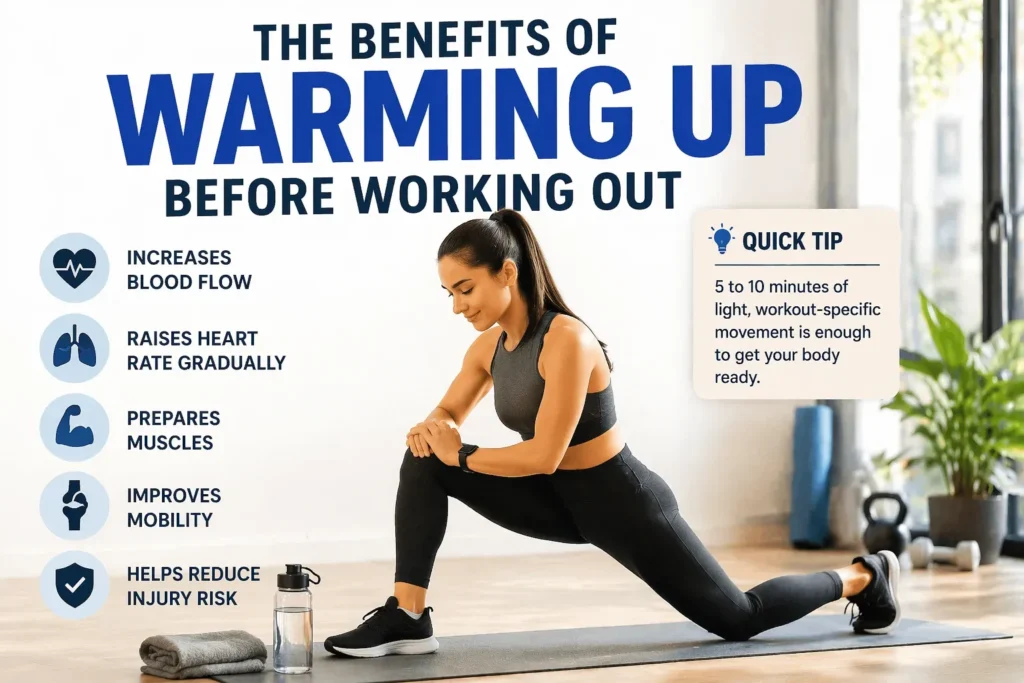
A warm-up gets your body ready for exercise in a gradual way.
As the American Heart Association notes, warming up helps widen blood vessels, improve oxygen delivery, and slowly increase heart rate. This usually makes movement feel more comfortable, especially at the start of a workout. It’s important for beginners because your body is still adapting to new movement patterns and exercise stress.
If you’ve already noticed next-day stiffness or heavy soreness after training, Should I Work Out When Sore? can help you understand what normal recovery can feel like, when it makes sense to train lightly, and how often a beginner routine should be.
What happens if you skip a warm-up?
Skipping a warm-up does not guarantee that something bad will happen. But it often makes the first part of your workout feel worse than it needs to.
You may notice that:
- your body feels stiff at the start
- your breathing feels rough too early
- your movements feel slower or less controlled
- exercises feel harder than expected
MedlinePlus advises warming up muscles and joints with low-level movement for about 5 to 10 minutes before exercise. This is one reason a short warm-up is usually worth the time.
How long should a warm-up be?
For most beginners, 5 to 10 minutes is enough.
That’s usually long enough to raise your heart rate a little, loosen your body, and mentally shift into workout mode. Your warm-up should not leave you tired before the real workout begins.
A slightly longer warm-up may help if:
- it’s cold outside
- you feel unusually stiff
- you’re lifting heavier weights
- you’re doing a harder workout
- you’re getting back into exercise after a long break
What a good beginner warm-up looks like
A good warm-up is usually simple, light, and specific to the workout you’re about to do.
This means your warm-up should look a bit like the activity ahead, just at an easier level.
Before cardio
If you’re about to walk fast, jog, use a bike, or do a cardio workout, start slower first.
A simple cardio warm-up might be:
- 3 to 5 minutes of easy walking or easy cycling
- then 2 to 5 minutes of gradually picking up the pace
Before strength training
If you’re about to lift weights or do resistance training, begin with light movement and easier practice sets.
A simple strength warm-up might include:
- 3 to 5 minutes of brisk walking or marching in place
- bodyweight squats
- arm circles
- hip circles
- light versions of the exercises you plan to do
So if you’re planning squats, start with bodyweight squats. If you’re planning presses or rows, start with a much lighter load first.
Muscle change comes from repeated training and recovery, not from jumping into hard effort without preparing your body first.
Do I need to stretch before working out?
Not always in the way many people think.
You do not need a long stretching routine before every workout. What usually helps more is light movement first, followed by gentle mobility work if you need it.
A lot of beginners think warming up means standing still and holding stretches for several minutes. But a warm-up is really about getting the body moving. Dynamic movement usually fits better before exercise than just staying still.
This can include:
- arm swings
- leg swings
- bodyweight lunges
- torso rotations
- easy rehearsal reps of your first exercise
Warm-up vs stretching: what’s the difference?
They’re related, but they’re not the same.
A warm-up prepares your body for exercise by gradually increasing movement, blood flow, and effort.
Stretching focuses more on flexibility or range of motion.
So if you only have time for one, a true warm-up is usually the better choice before a workout.
Do beginners need to warm up for every workout?
In most cases, yes.
If you’re doing a real workout, even a short one, a short warm-up is usually a smart idea. It doesn’t need to be fancy. It just needs to help your body ease in.
This is especially useful if:
- you’re new to exercise
- you work out in the morning
- your body tends to feel stiff
- you’re lifting weights
- you’re doing higher-intensity cardio
Even if your workout is short, warming up can still make it feel better.
What if I am only going for a walk?
If it’s an easy walk, you usually do not need a separate formal warm-up.
You can simply start at an easy pace and let the first few minutes become your warm-up. Then increase speed if you want to. The CDC’s physical activity guidance also supports spreading movement through the week rather than treating exercise like something that always has to be technical or complicated.
Our guide on how often beginners should work out will help you understand that many beginners actually do better when exercise feels doable and repeatable, not overwhelming.
Signs your warm-up is working
A good warm-up should leave you feeling:
- a little warmer
- a little looser
- more awake
- more ready to move
- not tired or drained
That’s the sweet spot.
Signs your warm-up needs work
Your warm-up may need adjustment if:
- you still feel very stiff when the workout starts
- you rush into hard effort too fast
- you feel tired before the main workout begins
- your warm-up has nothing to do with the workout ahead
In most cases, the fix is simple. Make it shorter, lighter, and more specific.
A simple 5-minute beginner warm-up
If you want a quick default option, use this:
1 minute
Walk in place or march lightly
1 minute
Arm circles and shoulder rolls
1 minute
Bodyweight squats or sit-to-stands
1 minute
Hip circles and gentle leg swings
1 minute
A lighter version of your first exercise
These should be enough for many beginner workouts.
Should you cool down too?
Yes, that can help too.
The American Heart Association explains that cooling down helps your body return more gradually toward its resting state. For many beginners, this can be as simple as slowing down for a few minutes after cardio or walking around briefly after a harder session.
Common beginner mistakes
Making the warm-up too long
Your warm-up should prepare you, not become the whole workout.
Stretching hard while cold
It’s usually better to get moving first before doing deeper flexibility work.
Doing nothing before intense exercise
Jumping straight into hard effort often feels rougher than it needs to.
Using the same warm-up for every workout
A good warm-up should match the session. Your body does not need the exact same prep for every kind of exercise.
When to be more careful
If you have chest pain, dizziness, a heart condition, major joint pain, or another medical issue that affects exercise safety, it’s important to speak with a healthcare professional before starting a new routine. The CDC’s guidance on getting active also supports building activity gradually, especially if you’ve been inactive or are returning after a long break.
FAQ
Yes, usually. Even before a short workout, a few minutes of light movement can help your body ease in.
Often, yes. Walking is a solid warm-up before many beginner workouts, especially cardio or lower-body sessions.
Yes. Start with light movement, then do easier or lighter versions of the lifts you plan to do.
You can, but it’s usually still better to warm up. A short warm-up helps prepare your body even when you already feel fine.
The Bottom Line
Yes, most beginners should warm up before working out. In most cases, 5 to 10 minutes of light, workout-specific movement is enough. You don’t need a complicated routine. You just need to help your body shift into exercise gradually.
Keep it simple. Start easy. Then build into the workout.
Medical disclaimer: This article is for educational purposes only and does not replace medical advice, diagnosis, or treatment. If you have a medical condition, symptoms during exercise, or concerns about starting a workout routine, speak with a qualified healthcare professional.