Written by: Precious Eze
Medically Reviewed by: Dr. Deborah Akinlola
Last reviewed: April 2, 2026
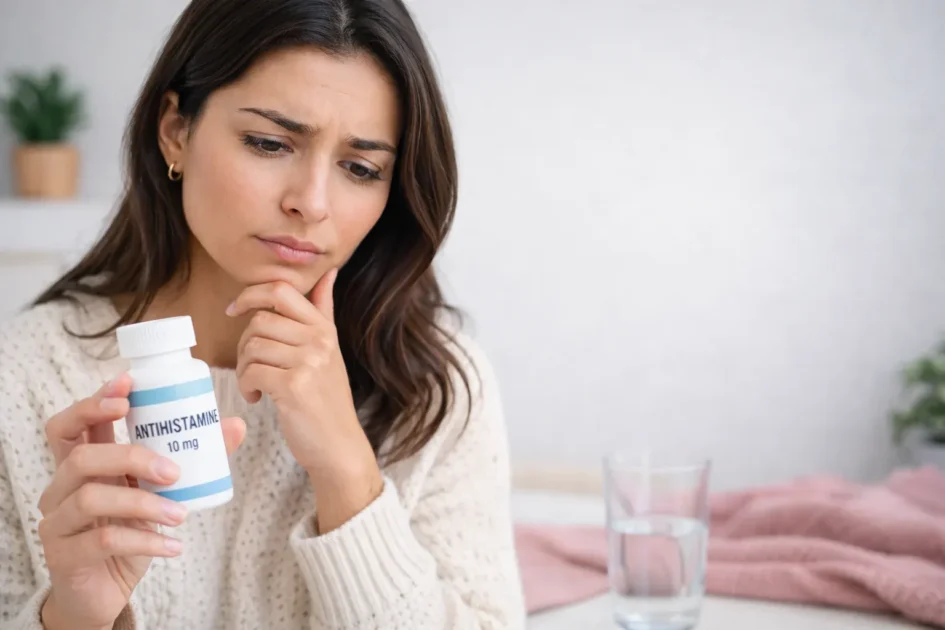
Yes, antihistamines can cause vaginal dryness in some women. These medicines are meant to reduce allergy symptoms, but they can also reduce normal moisture in the body. This drying effect is well known in places like the mouth and eyes. The American College of Obstetricians and Gynecologists notes that cold and allergy medications can also dry vaginal tissue.
This does not mean everyone who takes an antihistamine will develop vaginal dryness. But if you started allergy medicine and then noticed less natural lubrication, more friction, burning, irritation, or discomfort during sex, the medicine could be part of the reason. As Cleveland Clinic explains in its vaginal dryness overview, medications are one of several possible causes.
Click to Jump
Quick answer
Antihistamines can sometimes make vaginal tissue feel drier because they reduce some of the body’s normal secretions. The effect may be more noticeable if you already have another dryness trigger, such as low estrogen, menopause, breastfeeding, or another medicine with drying side effects. The ACOG guidance on vaginal dryness makes this point clear.
How antihistamines can lead to vaginal dryness
Antihistamines work by blocking the effects of histamine during an allergic reaction. This helps with symptoms like sneezing, itching, and a runny nose. But it can also dry out normal moisture-producing tissues. This is why dry mouth and dry eyes are well-known side effects of antihistamines. It also helps explain why some women notice vaginal dryness while taking them. Cleveland Clinic’s antihistamine overview gives a good general explanation of how these medicines work and why they can feel drying.
Some cold and allergy products also contain a decongestant, which can make the dryness feel worse. So sometimes it’s not just the antihistamine alone that’s contributing to the problem.
Common antihistamines people ask about
Women often ask about medicines such as:
- cetirizine
- loratadine
- fexofenadine
- diphenhydramine
- chlorpheniramine
The main point is not that one brand always causes vaginal dryness. It’s that antihistamines as a group can have drying effects, and some people are simply more sensitive to them than others.
What vaginal dryness from antihistamines can feel like
Vaginal dryness doesn’t always mean you feel obviously dry all day. Sometimes it shows up in more subtle ways, such as:
- less natural lubrication
- friction during sex
- burning or stinging
- irritation
- soreness after sex
- discomfort in the vagina or vulva
According to Cleveland Clinic’s symptom guide, vaginal dryness can also cause soreness, itching, burning, and pain during sex.
Red flags that should not be ignored
Do not assume every vaginal symptom is just dryness from allergy medicine. Get medical care sooner if you have:
- thick white discharge
- a strong or unusual odor
- sores or blisters
- bleeding that is not normal for you
- pelvic pain
- fever
- burning when you urinate
- symptoms that keep coming back
- severe pain during sex
These symptoms can point to vaginitis, an STI, a skin condition, or another problem that needs the right diagnosis. ACOG’s vaginitis guidance explains that different vaginal conditions can overlap in symptoms, which is one reason self-diagnosis is not always reliable.
Can antihistamines cause a yeast infection too?
Antihistamines are not a classic cause of yeast infection in the way antibiotics are. This distinction is important. Antibiotics can disrupt the normal balance of vaginal flora, which is why the link between antibiotics and yeast infection is much stronger. If you want to understand that connection better, see Can Antibiotics Cause a Yeast Infection, where the mechanism is much clearer.
Antihistamine-related dryness can sometimes feel like an infection, especially when irritation or discomfort is the main symptom. Vaginal dryness usually causes low moisture and friction, while a yeast infection is more likely to cause intense itching, inflammation, and thick discharge. The World Health Organization’s candidiasis fact sheet and ACOG’s vaginitis page both help show why these are not the same problem.
Other reasons you might feel dry while taking antihistamines
Sometimes the antihistamine is only part of the picture. Vaginal dryness becomes more likely when other factors are present too, including:
- menopause or perimenopause
- breastfeeding
- low estrogen
- dehydration
- smoking
- autoimmune conditions such as Sjögren syndrome
- not enough arousal before sex
- certain other medicines
- fragranced products or irritants
The ACOG article on vaginal dryness specifically lists low-estrogen states, breastfeeding, smoking, Sjögren syndrome, and some medicines among important causes.
This is why timing matters. If the dryness started after you began the medicine, got worse with more frequent use, or feels worse on the days you take it, the medicine becomes a stronger suspect.
Could birth control be part of it instead?
Sometimes, yes. If someone is taking both hormonal birth control and antihistamines, it may be harder to tell which one is contributing more to the symptom. In this situation, Common Drugs That Affect Your Vagina can help you see the wider medication picture. While Can Birth Control Cause a Yeast Infection is useful if you are already trying to understand whether hormones may be affecting your vaginal symptoms too.
What you can do if antihistamines seem to be the cause
If you think your allergy medicine is drying you out, there are a few practical steps that may help.
1. Look at the timing
Ask yourself:
- Did the dryness start after I began the medicine?
- Did it get worse when I took it more often?
- Is it more noticeable on the days I use it?
This pattern can help you and your clinician work out whether the medicine is involved.
2. Check whether it’s a combination product
Some cold and allergy products combine an antihistamine with another drying ingredient. If you’re using a combination medicine, that may explain why the dryness feels worse.
3. Use a vaginal moisturizer or lubricant if needed
For symptom relief, vaginal moisturizers and lubricants can help reduce friction and discomfort. ACOG explains that moisturizers and lubricants can help relieve vaginal dryness and painful sex.
A simple way to think about them is this:
- moisturizers help with ongoing dryness
- lubricants help more during sex
4. Avoid irritants that can make dryness worse
Try to avoid:
- scented washes
- vaginal douches
- heavily fragranced pads or liners
- harsh soaps
- perfumed sprays in the genital area
Dry tissue gets irritated more easily, so these products can make the discomfort worse. ACOG’s vulvovaginal health guidance supports avoiding irritants and using gentler care.
5. Talk to a clinician before switching medicines
If the dryness is persistent or affecting your quality of life, speak with a clinician before stopping or changing a prescribed medicine. Vaginal dryness has several possible causes, so it helps to look at the full picture instead of assuming the antihistamine is the only explanation.
When to see a doctor
See a doctor or gynecologist if:
- the dryness lasts more than a short time
- sex becomes painful
- over-the-counter moisturizers or lubricants do not help
- you also have discharge, odor, itching, or bleeding
- the symptom keeps returning
- you think several medicines may be involved
Persistent vaginal dryness deserves attention because medication is only one possible cause. In some women, the bigger issue is low estrogen, menopause, breastfeeding, irritation, or another vaginal condition that needs treatment.
The bottom line
Antihistamines can cause vaginal dryness in some women. It doesn’t happen to everyone, but it’s a real possibility. The chance may be higher if you already have another dryness trigger or if you’re taking a cold or allergy product with stronger drying effects.
The main mistake to avoid is confusing dryness with infection. If your symptoms are mostly reduced moisture, friction, and discomfort, an antihistamine may be part of the reason. If you also have thick discharge, strong itching, odor, or persistent irritation, it’s worth getting checked.
FAQ
Yes. The American College of Obstetricians and Gynecologists specifically includes cold and allergy medications among the possible causes of vaginal dryness.
They can in some people, though not everyone will notice it. The more accurate way to think about it is that antihistamines as a class can have drying effects.
No. Vaginal dryness and yeast infection are different problems, though they can overlap in how they feel at first. Yeast infection is more likely to come with itching, burning, and a characteristic discharge.
Usually, medication-related dryness is not permanent, but persistent symptoms should be checked because something else may also be contributing.
Medical disclaimer: This article is for educational purposes only and is not a substitute for medical advice, diagnosis, or treatment. If you have persistent vaginal dryness, pain, unusual discharge, bleeding, sores, or worsening symptoms, see a qualified healthcare professional.