Written by: Precious Eze
Medically reviewed by: Dr. Deborah Akinlola
Last reviewed: April 22, 2026
Yes, antidepressants can sometimes contribute to vaginal dryness. They don’t affect everyone this way, but some women notice less natural lubrication, lower arousal, discomfort during sex, or a general feeling of dryness after starting certain antidepressants. The NHS includes antidepressants among the medicines that can contribute to vaginal dryness. Mayo Clinic also notes that antidepressant sexual side effects in women can include trouble with lubrication and sexual comfort.
This doesn’t automatically mean your antidepressant is the cause. Vaginal dryness can also happen because of menopause, breastfeeding, hormonal shifts, stress, anxiety, irritation, some other medicines, or medical conditions. Still, if the dryness began after you started an antidepressant or got worse after a dose change, the medicine is worth considering. Both Cleveland Clinic and the NHS explain that medicines can be part of the reason.
Click to Jump
How antidepressants may lead to vaginal dryness
Antidepressants can affect sexual function in a few different ways. Some reduce sexual desire. Some make arousal harder. Some make natural lubrication less noticeable or make sex feel less comfortable. When arousal drops, lubrication may drop too. This can leave sex feeling dry, irritating, or even painful. Mayo Clinic explains that antidepressant sexual side effects can include changes in desire, lubrication, and sexual comfort.
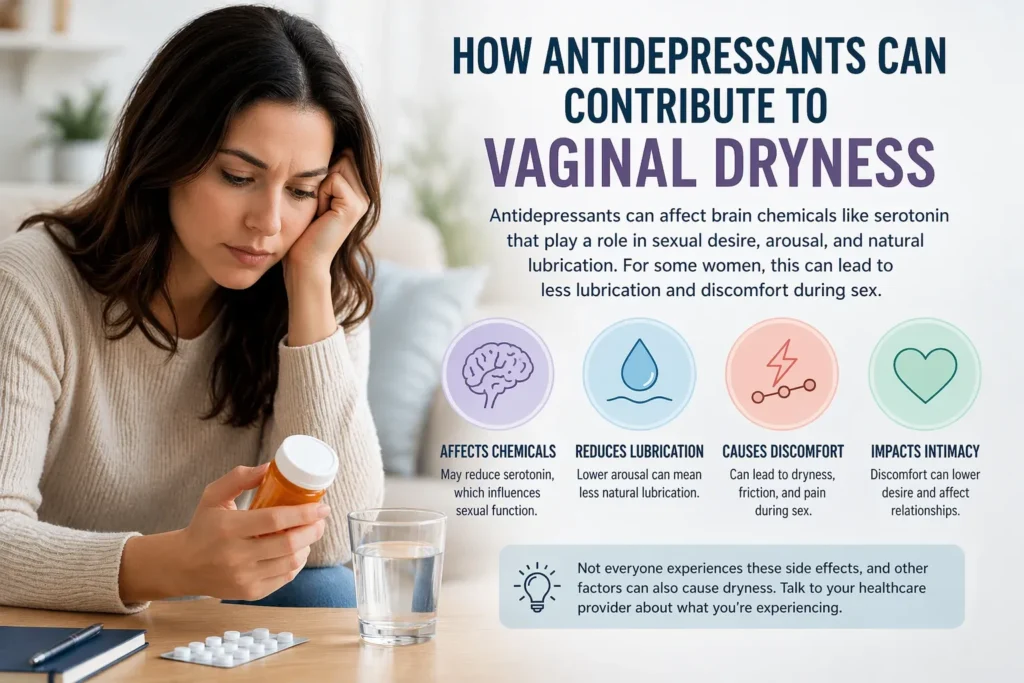
This can feel confusing because depression itself can also affect libido, arousal, and comfort during sex. In some cases, the dryness may be linked to the condition, the medicine, or both. Cleveland Clinic notes that depression can affect sex in several ways, including vaginal dryness. While Mayo Clinic explains that antidepressants can also cause sexual side effects.
Which antidepressants are more likely to cause this?
Sexual side effects are more often discussed with SSRIs and SNRIs. SSRIs include medicines such as fluoxetine, sertraline, paroxetine, citalopram, and escitalopram. SNRIs include medicines such as venlafaxine and duloxetine. Not everyone who takes these medicines develops vaginal dryness, but they’re among the antidepressants more often linked to sexual side effects in general. Mayo Clinic highlights SSRIs among the better-known causes of antidepressant sexual side effects. The NHS page on venlafaxine and NHS page on fluoxetine also discuss sexual side effects with these medicines.
Some antidepressants may be less likely to cause sexual side effects than others. For example, Mayo Clinic often points to options such as bupropion, and in some cases mirtazapine, as having a lower risk than many SSRIs. It doesn’t mean they’re right for everyone, and it doesn’t mean you should switch on your own. It simply means the exact medicine can make a real difference.
What vaginal dryness from antidepressants can feel like
The symptoms aren’t always obvious at first. Some women don’t describe it as dryness right away. Instead, they notice:
- less natural wetness during arousal
- friction during sex
- burning or soreness afterward
- discomfort when inserting a tampon
- a feeling that sex suddenly feels different
- lower desire because sex has become uncomfortable
If you’re trying to work out whether dryness is really the main issue, Can Antihistamines Cause Vaginal Dryness? may also help. Because the overall pattern can feel similar even when the medicine involved is different.
Is it the antidepressant or something else?
That’s the real question.
Vaginal dryness has several possible causes, so it’s important not to blame one medicine too quickly. Menopause is one of the most common reasons. Breastfeeding, hormonal contraception, cancer treatment, some skin conditions, and irritation from soaps or washes can also play a role. The NHS and Cleveland Clinic both explain that dryness can have many causes besides medicines.
Infections can also cause burning, irritation, and discomfort, but they usually bring other clues as well. A yeast infection often causes itching and thick discharge. BV is more often linked to a fishy smell and thin gray discharge. Comparing those patterns can have you asking if antibiotics can cause a yeast infection? or can Metronidazole cause a yeast infection? Or if antibiotics can cause bacterial vaginosis? Learning about these can help you sort through the differences more clearly.
What to do if you think your antidepressant is causing vaginal dryness
Don’t stop the medicine on your own.
That’s the most important step. Suddenly stopping some antidepressants can make you feel worse and may lead to withdrawal symptoms or a return of depression or anxiety symptoms. Mayo Clinic advises talking with a healthcare professional about sexual side effects rather than changing treatment by yourself.
Your clinician may suggest:
- giving it a little more time if you just started treatment
- checking whether the dose is contributing
- switching to another antidepressant
- looking for another cause of the dryness
- treating the dryness directly while keeping the antidepressant
How vaginal dryness is usually managed
Treatment depends on the cause, but simple steps often help.
A good vaginal moisturizer can help with ongoing dryness, while a lubricant can reduce friction during sex. Mayo Clinic’s guidance on female sexual dysfunction recommends lubricants and vaginal moisturizers for dryness and pain during sex. Cleveland Clinic also notes that over-the-counter and prescription treatments may help improve comfort.
It’s important to also avoid irritants. Harsh soaps, scented washes, douches, fragranced pads, and some bath products can make dryness and irritation worse. If sex has become painful, it’s worth dealing with it early. Pain can create a cycle where you start to brace for discomfort, feel less aroused, and then experience even more dryness.
If you also have broader irritation or you suspect more than one medicine may be involved, 3 Common Drugs that Affect Your Vagina can help you place antidepressants within the wider picture of medication-related vaginal side effects.
When you should see a doctor
Make an appointment if:
- the dryness lasts more than a few weeks
- sex has become painful
- you also have itching, unusual discharge, odor, or bleeding
- symptoms started after a medicine change
- over-the-counter lubricants or moisturizers aren’t helping
- the problem is affecting your relationship, mental health, or quality of life
If you’re near menopause or already have hot flashes, sleep changes, or irregular periods, hormone changes may also be part of the picture. Mayo Clinic’s page on vaginal atrophy explains that vaginal dryness is often linked to menopause and may need a different treatment approach when hormone changes are the main cause.
A quick word on shame and silence
A lot of women don’t bring this up. They may feel embarrassed, worry that it sounds minor, or assume they just have to live with it. But vaginal dryness isn’t something you should ignore if it’s affecting comfort or intimacy. It’s a real symptom, and in many cases it can improve once the cause is clearer.
The bottom line
Antidepressants can cause vaginal dryness in some women, especially when the medicine affects arousal, libido, or sexual comfort. SSRIs and SNRIs are more often linked to sexual side effects, but the exact experience varies from person to person. Vaginal dryness can also have other causes, so it’s best not to self-diagnose. If symptoms began after starting an antidepressant, talk with your prescriber instead of stopping the medicine yourself. In many cases, the problem can be managed by adjusting treatment, treating the dryness directly, or both.
FAQ
Yes, they can. SSRIs are among the antidepressants more often linked to sexual side effects. This can include reduced lubrication or discomfort during sex, as Mayo Clinic explains.
No. Some people never experience it at all, and some antidepressants appear less likely than others to cause sexual side effects.
No. Don’t stop it on your own. Speak with the clinician who prescribed it so they can help you decide whether the medicine, the dose, or another cause may be involved.
Sometimes, yes. For some people it improves with time. For others, it improves after a dose change, a switch in medication, or treatment with lubricants or moisturizers.
It can. Cleveland Clinic notes that depression can affect sexual desire, arousal, and comfort, which can overlap with medication side effects.
Medical disclaimer: This article is for educational purposes only and isn’t a substitute for medical advice, diagnosis, or treatment. If you have persistent vaginal dryness, pain, unusual discharge, bleeding, or other worrying symptoms, see a qualified healthcare professional.