Written by: Abiola Johnson
Medically reviewed by: Dr. Joan Chika
Last reviewed: April 21, 2026
If it hurts when you have sex, don’t ignore it. Pain during sex is common, but it isn’t something you should have to live with. Sometimes the cause is simple, like dryness or irritation. Other times, it may point to an infection, pelvic floor tension, endometriosis, vulvodynia, or another condition that needs treatment.
As ACOG explains, treatment depends on the cause. So it helps to notice where the pain happens, what the pain feels like, and what other symptoms come with it.
Click to Jump
Quick answer
It can hurt when you have sex because of dryness, irritation, yeast infection, BV, an STI, pelvic floor muscle tension, vulvodynia, endometriosis, ovarian cysts, fibroids, or other pelvic problems. Pain near the vaginal opening often points more toward dryness, irritation, infection, or vulvar pain. Deeper pain may be more linked to pelvic conditions. If the pain is new, severe, keeps happening, or comes with bleeding, unusual discharge, fever, or burning when you pee, see a doctor.
What painful sex can feel like
Pain during sex doesn’t feel the same for everyone. According to Cleveland Clinic’s overview of dyspareunia, some women feel burning or stinging at the vaginal opening, while others feel sharp pain, deep aching, throbbing after sex, pelvic cramping, or muscle tightness.
It’s necessary to note this difference. Surface pain often points more toward dryness, irritation, infection, or vulvar pain. Deep pain is more likely to point toward a pelvic cause.
Is painful sex normal?
No. It may be common, but it isn’t something to treat as normal.
Painful intercourse, also called dyspareunia, can happen before sex, during sex, or after sex. Mayo Clinic notes that the pain may be only with penetration, with every penetration, with certain partners or situations, or as deep pain during thrusting.
Where the pain happens can give you a clue
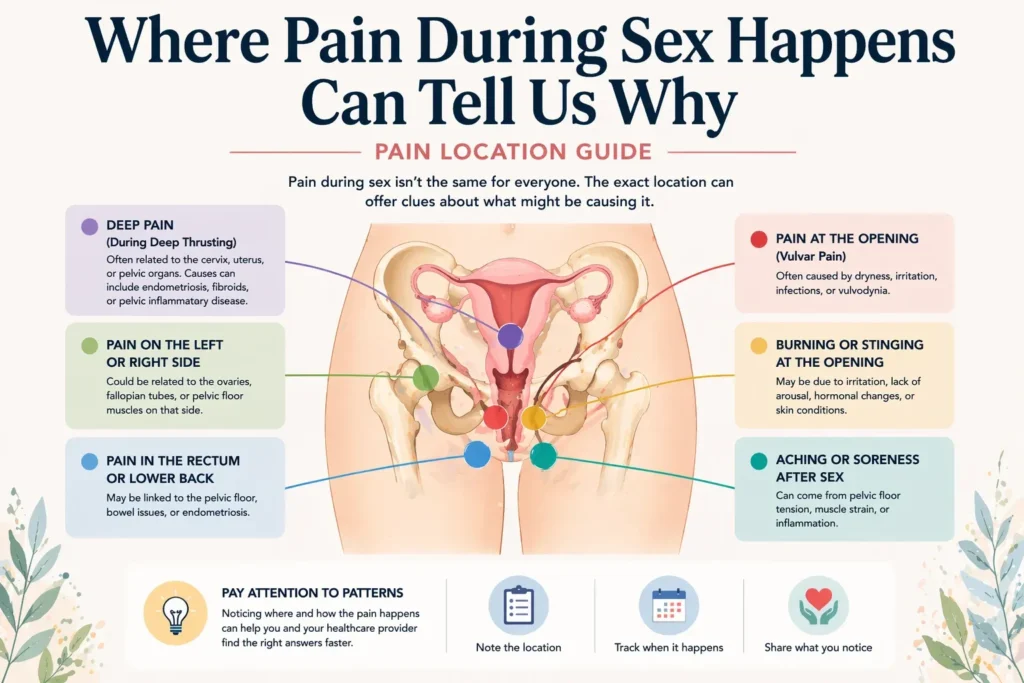
Pain at the vaginal opening
Pain near the entrance of the vagina may be linked to:
- vaginal dryness
- not enough arousal before penetration
- irritation from soaps, scented products, condoms, or lubricants
- yeast infection
- bacterial vaginosis
- some STIs
- vulvodynia
- vaginismus or pelvic floor muscle tightening
If the pain feels more like burning, itching, or irritation around the vulva, the same symptom pattern can overlap with that in Why Is My Vagina Itchy? Common Causes and What to Do.
Deep pain during penetration
Pain that feels deeper in the pelvis may be linked to:
- endometriosis
- pelvic inflammatory disease
- ovarian cysts
- fibroids
- pelvic floor dysfunction
- other uterine or pelvic conditions
The NHS page on vaginismus also notes that pain during sex can be linked to infections, menopause-related changes, pelvic conditions, or muscle tension.
Common causes of painful sex in women
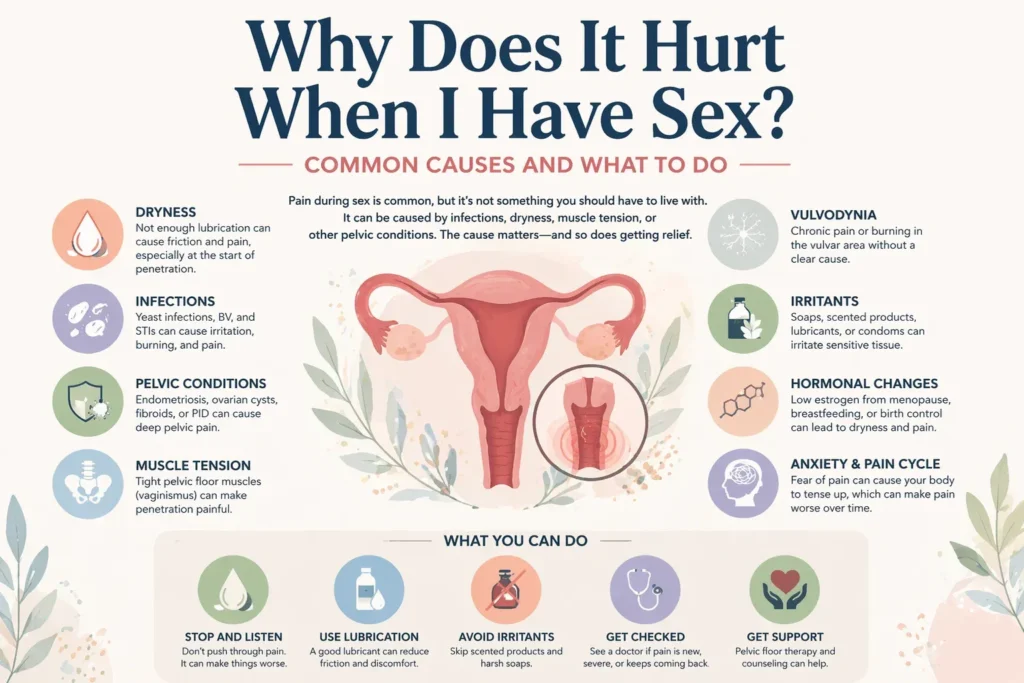
1) Vaginal dryness
This is one of the most common causes.
When the vagina isn’t well lubricated, friction can make penetration painful. This may happen if you weren’t fully aroused, but it can also happen with hormonal changes, breastfeeding, menopause, stress, or some medicines. ACOG includes lack of lubrication among common causes of painful sex.
Dryness often causes:
- burning
- tightness
- rubbing pain
- pain at the start of penetration
2) Yeast infection
A yeast infection can make sex painful because the tissues are already irritated and inflamed.
You may also notice:
- itching
- redness
- soreness
- swelling
- thick white discharge
If the pain comes with itching, soreness, and thick white discharge, you might want to look at Vaginal Yeast Infection: Symptoms, Causes, Treatment, and Prevention for a fuller breakdown of that pattern.
3) Bacterial vaginosis
BV doesn’t always cause painful sex, but it can in some women, especially when irritation is already present.
You may also notice:
- thin discharge
- a strong fishy smell
- mild irritation
If sex hurts and you’ve also noticed a fishy odor, Why Does My Vagina Smell Fishy? explains one of the most common reasons that combination happens.
4) STIs
Some sexually transmitted infections can cause vaginal irritation, pelvic pain, bleeding, discharge, and pain during sex. ACOG lists infections as one possible cause of painful sex.
Painful sex becomes more concerning if you also have:
- unusual discharge
- bleeding after sex
- burning when you pee
- pelvic pain
- sores
- a new sexual partner
- fever
If you’re struggling to tell whether your symptoms sound more like yeast, BV, or an STI, Yeast Infection vs BV vs STI: How to Tell the Difference can help you compare the usual patterns.
5) Vulvodynia
Vulvodynia is ongoing pain, burning, or stinging in the vulva. It can make penetration painful even when there’s no obvious infection.
Women with vulvodynia may feel:
- burning
- stinging
- rawness
- pain with touch
- pain with sex, tampons, or tight clothing
6) Vaginismus or pelvic floor muscle tension
Sometimes the muscles around the vagina tighten automatically. This can make penetration painful, difficult, or even impossible.
The NHS explains vaginismus as an automatic tightening reaction you don’t control. Cleveland Clinic notes that treatment often includes pelvic floor therapy and other supportive care.
7) Pelvic floor guarding, fear of pain, or anxiety
Sometimes pain starts with a physical cause, but the body begins to expect pain and tightens up before penetration happens. This can make the pain worse or keep it going even after the original trigger improves.
This does not mean the pain is “just in your head”. It means pain, muscle tension, and fear of pain can reinforce each other. Cleveland Clinic notes that painful sex can have emotional and psychological effects, and Mayo Clinic includes emotional factors among possible contributors in some cases.
8) Endometriosis
Endometriosis can cause deep pain during sex, especially with deeper penetration.
Other symptoms may include:
- painful periods
- pelvic pain
- pain with bowel movements
- fertility problems
- pain that gets worse around your period
This kind of pain usually feels different from surface burning or irritation. ACOG includes endometriosis among gynecologic causes of painful sex.
9) Pelvic inflammatory disease
Pelvic inflammatory disease, or PID, is an infection of the upper reproductive organs. The NHS explains that PID can affect the womb, fallopian tubes, and ovaries. Pain during sex can be one of its symptoms, especially when deeper pelvic structures are involved.
PID may also cause:
- lower abdominal pain
- unusual discharge
- fever
- pain when peeing
- bleeding between periods
10) Menopause and low estrogen
Lower estrogen can make the vaginal tissues thinner, drier, and easier to irritate.
This can also happen:
- after childbirth
- during breastfeeding
- around perimenopause
- after menopause
ACOG’s guidance on vulvar pain, burning, and itching notes that low estrogen can contribute to dryness, burning, irritation, and pain with sex.
11) Skin irritation or allergic reactions
Sometimes the problem isn’t an infection at all.
The pain may come from a reaction to:
- scented soap
- vaginal washes
- bubble baths
- pads or liners
- detergents
- lubricants
- latex condoms
- spermicides
This kind of irritation may also cause itching, redness, or burning, even without unusual discharge.
Other symptoms that help narrow it down
Pain during sex makes more sense when you look at the full symptom pattern.
If you also have itching
It may point more toward yeast infection, irritation, allergic reaction, or another vulvar skin problem. If itching has been one of your main symptoms, Why Is My Vagina Itchy? Common Causes and What to Do goes deeper into what may be behind it.
If you also have a fishy smell
BV becomes more likely. In that case, Bacterial Vaginosis: Symptoms, Causes, Treatment, and Prevention can help you understand the bigger picture.
If you also have unusual discharge
The color, texture, and smell can offer useful clues. If discharge changes are part of what you’re noticing, understanding what the different colors of vaginal discharge mean and the causes and whether it’s abnormal or not can offer more clarity.
If you also have burning when you pee
The cause may not be a simple urinary issue. It could still involve vaginal irritation, infection, or an STI.
If you also have bleeding after sex
It’s worth getting checked. MedlinePlus advises getting medical care if intercourse suddenly becomes painful or if you think an infection or STI may be involved.
If the pain feels deep in the pelvis
Think beyond the vagina itself. Pelvic conditions like endometriosis, PID, fibroids, or ovarian cysts may need evaluation.
What to do if sex hurts
Stop doing anything that makes the pain worse
Don’t push through it. Repeated painful sex can make the body tense up more and make the problem harder to break.
Notice what the pain feels like
Pay attention to:
- whether it’s surface pain or deep pain
- whether it happens only at the start or throughout sex
- whether you also have discharge, odor, itching, bleeding, or urinary symptoms
- whether it happens every time or only sometimes
These details can help a doctor find the cause faster.
Try a simple lubricant if dryness seems likely
A simple lubricant may help if the problem is mostly friction or dryness. But if you also have itching, odor, discharge, or burning, don’t assume lubrication is the only answer.
Avoid irritants
It may help to stop using scented washes, vaginal deodorants, harsh soaps, perfumed pads, or irritating lubricants.
Get checked if symptoms keep coming back
Recurring pain deserves a real diagnosis. As ACOG explains, treatment works best when the underlying cause is identified correctly.
When to see a doctor
See a doctor if:
- sex suddenly becomes painful
- the pain keeps coming back
- you have unusual discharge
- you have a fishy odor
- you have itching, sores, or swelling
- you bleed after sex
- you have fever or pelvic pain
- you have burning when you pee
- you think you may have an STI
- the pain is severe
- you’re avoiding sex because of the pain
How painful sex is treated
Treatment depends on the cause.
Examples include:
- antifungal treatment for yeast infection
- antibiotics for BV or some bacterial infections
- STI treatment when needed
- lubricants or moisturizers for dryness
- hormonal treatment in some low-estrogen cases
- pelvic floor physical therapy
- treatment for vulvodynia
- treatment for endometriosis or other pelvic conditions
There isn’t one fix for everyone. This is why self-diagnosing can keep the problem going longer than it should.
Common mistakes to avoid
Assuming it’s just dryness
Dryness is common, but it isn’t the only cause.
Treating every pain like a yeast infection
Not all vaginal pain is yeast. Repeated self-treatment can delay the right diagnosis.
Ignoring the full symptom pattern
Discharge, odor, itching, bleeding, and urinary symptoms can change the picture completely.
Forcing sex through the pain
This usually makes things worse, not better.
The bottom line
Sex shouldn’t keep hurting. Pain during sex can happen for many reasons, including dryness, irritation, yeast infection, BV, STIs, vulvodynia, pelvic floor tension, endometriosis, and other pelvic problems. Surface pain and deep pain don’t usually point to the same causes, so the details matter. If the pain is new, severe, keeps happening, or comes with discharge, odor, itching, bleeding, or burning when you pee, get checked. The sooner the cause is identified, the easier it usually is to treat.
Medical disclaimer: This article is for educational purposes only and isn’t a substitute for medical advice, diagnosis, or treatment. If you have severe pain, fever, heavy bleeding, sores, or symptoms that keep coming back, see a qualified healthcare professional.