Written by: Abiola Johnson
Medically reviewed by: Dr. Joan Chika
Last reviewed: March 22, 2026
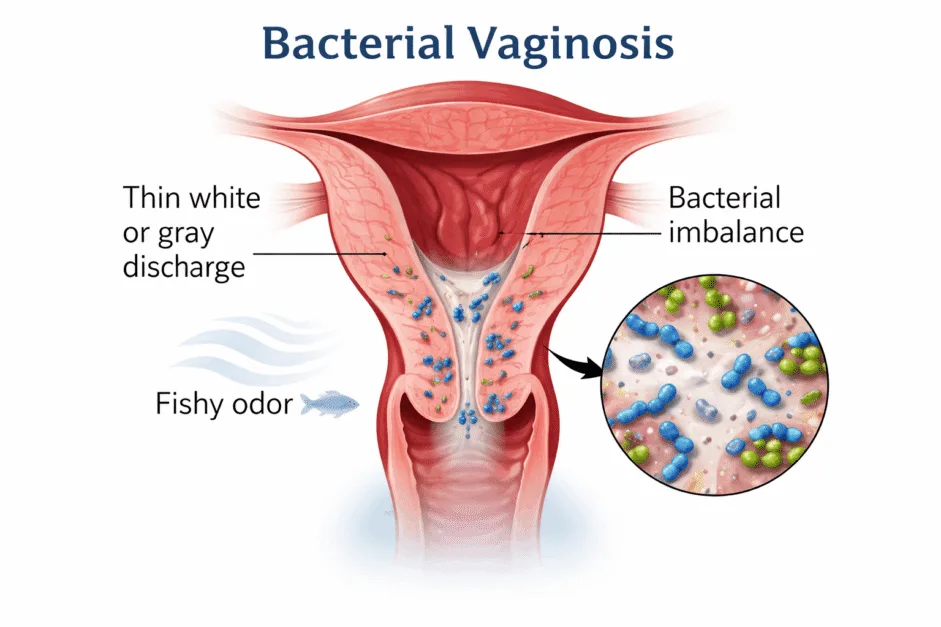
Bacterial vaginosis, often called BV, is a common vaginal condition caused by an imbalance in the normal bacteria in the vagina. It’s not the same as a yeast infection, and it is not something you catch from a toilet seat. BV can happen even without sex, but the risk may be higher with factors like douching, a new sex partner, or multiple sex partners. The good news is that BV is treatable.
Click to Jump
Quick answer
Bacterial vaginosis is a vaginal bacterial imbalance that often causes thin white, gray, or off-white discharge with a fishy smell, especially after sex. Some women have no symptoms at all. BV is usually treated with prescription antibiotics such as metronidazole or clindamycin. Because some antibiotics are culprits, it’s also important to know which antibiotics can cause bacterial vaginosis.
What is bacterial vaginosis?
The vagina naturally contains a healthy balance of bacteria. BV happens when this balance shifts and certain bacteria grow too much. This change can make the vaginal environment less acidic and lead to symptoms like unusual discharge and odor.
BV is very common. In fact, the CDC says it is the most common vaginal condition in women ages 15 to 44.
Common symptoms of bacterial vaginosis
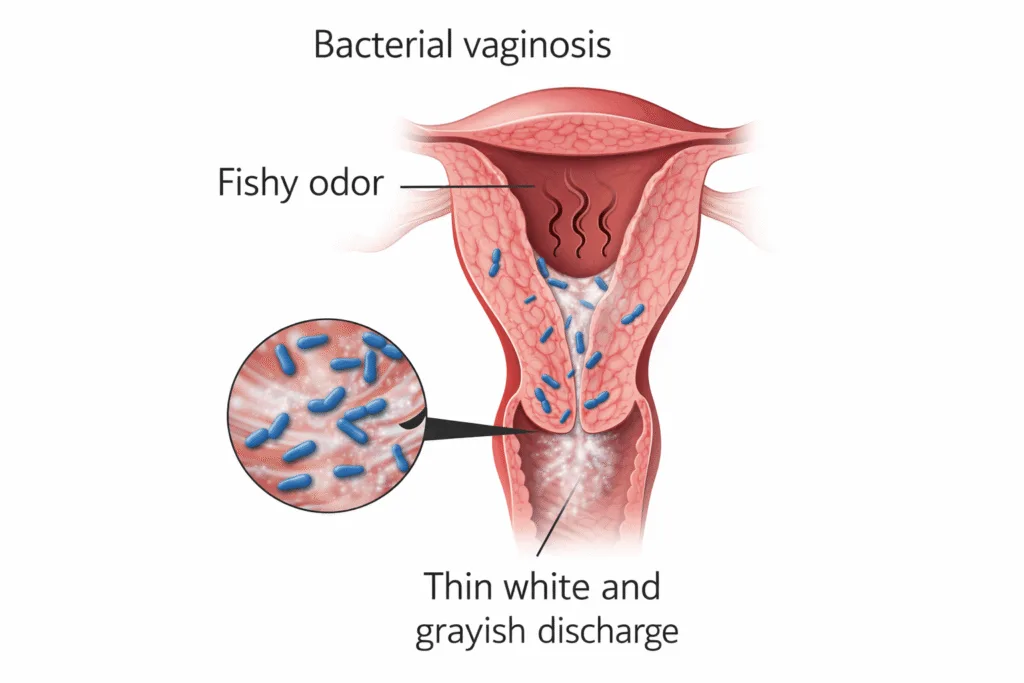
Some women with BV do not notice any symptoms. When symptoms do appear, they often include:
- Thin vaginal discharge
- White, gray, or off-white discharge
- A strong fishy smell, especially after sex
- Mild burning or irritation in some cases
One useful clue is this: BV does not usually cause intense itching. It’s one reason it’s often confused with a yeast infection. Also, knowing what the colors of vaginal discharge mean can give you a clue of what’s actually wrong.
Bacterial vaginosis vs yeast infection
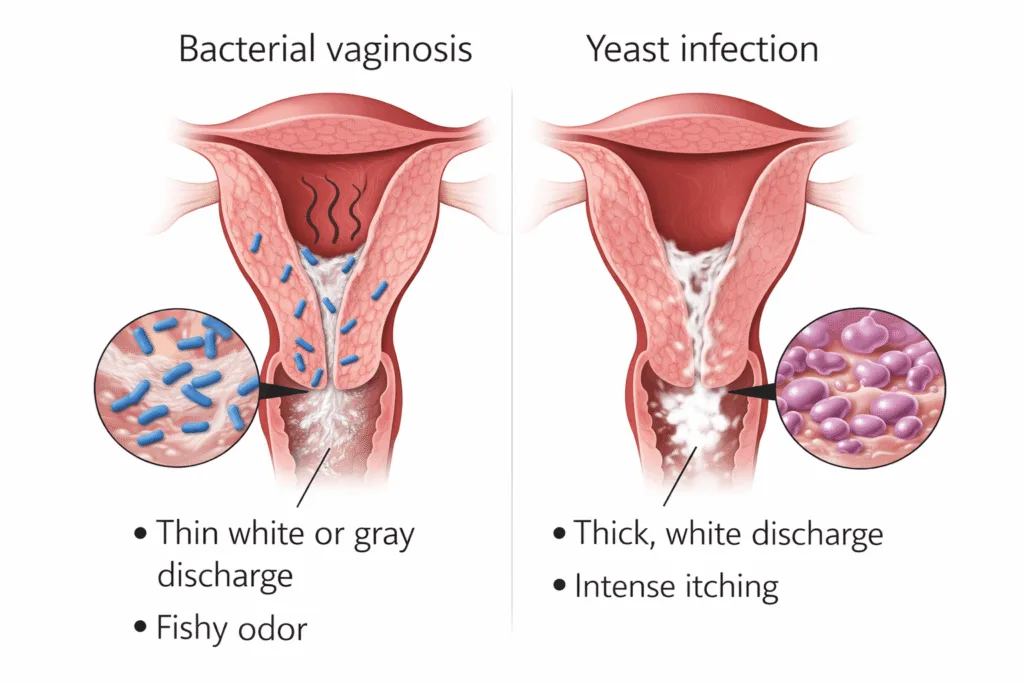
This is where many people get it wrong.
A yeast infection is a fungal infection, usually caused by Candida. It often causes intense itching, irritation, swelling, and thick white discharge that may look like cottage cheese. BV, by contrast, is more likely to cause thin discharge and a fishy odor.
If your symptoms seem similar, it helps to compare BV with a vaginal yeast infection, because the two are often confused but usually need different treatment.
This is why self-diagnosis can be risky. A woman may assume she has a yeast infection, use an antifungal medicine, and still not improve because the real issue is BV.
What causes bacterial vaginosis?
BV is caused by a disruption in the normal bacterial balance of the vagina. Doctors do not always know exactly why that shift happens, but several factors are linked to higher risk.
These include:
- Douching
- A new sex partner
- Multiple sex partners
- Not using condoms
- Using some scented or perfumed products around the vagina
BV is not usually classed as a classic STI, but sexual activity can affect the vaginal environment in ways that raise the risk. It can also happen in women who have never had sex.
Can you get bacterial vaginosis from toilets?
No. BV is not something you catch from toilet seats, bedding, or swimming pools. Many people casually call any vaginal problem “toilet infection,” even when the real cause may be BV, a yeast infection, or another condition entirely. This is wrong.
Is bacterial vaginosis an STI?
Not exactly.
BV is associated with sexual activity, but it’s not generally described as a sexually transmitted infection in the usual sense. Still, sex can influence the vaginal bacterial balance, and BV is more common in sexually active women. BV can also increase the risk of getting other STIs, which makes proper diagnosis important.
How bacterial vaginosis is diagnosed
A doctor or sexual health clinician may ask about your symptoms, examine the vagina, and take a sample of discharge to confirm BV and rule out other causes such as yeast infection, trichomoniasis, or some STIs.
This is important because vaginal discharge, odor, and irritation can overlap across different conditions.
Treatment for bacterial vaginosis
BV is usually treated with prescription antibiotics. According to the CDC STI treatment guidelines, recommended treatment options include metronidazole or clindamycin in tablet, gel, or cream form.
In practical terms, treatment may include:
- Metronidazole tablets
- Metronidazole vaginal gel
- Clindamycin vaginal cream
The NHS also explains that BV is commonly treated with antibiotic tablets, gels, or creams prescribed by a doctor or sexual health clinic.
Do not assume the treatment based only on smell or discharge. BV, yeast infection, and some STIs can seem similar at first.
Does bacterial vaginosis go away on its own?
Sometimes symptoms may settle without treatment, but BV can also persist or come back. Recurrence is common, which is one reason it helps to get the right diagnosis instead of guessing.
Why proper treatment matters
BV is often not dangerous, but it should not be ignored. The CDC notes that BV can increase the risk of getting other STIs. It may also raise the risk of certain pregnancy complications.
This doesn’t mean every case becomes serious. It means accurate diagnosis and proper treatment are important.
How to help prevent bacterial vaginosis
There is no guaranteed way to prevent BV, but these steps may help lower the risk:
- Do not douche
- Avoid perfumed soaps, vaginal deodorants, and scented washes
- Consider condom use during sex
- Wash the genital area gently
- Avoid products that disturb the normal vaginal environment
Both the CDC and NHS advise avoiding douching and irritating products that can upset the vagina’s natural balance.
When to see a doctor
See a doctor or sexual health clinic if:
- You have vaginal discharge with a strong odor
- You are not sure whether it is BV, yeast infection, or something else
- You are pregnant and think you may have BV
- Symptoms keep coming back
- You have pain, fever, bleeding, sores, or severe discomfort
These signs can point to something more than BV, and proper testing is the safest route.
FAQ
BV discharge is often thin, white, gray, or off-white, and it may come with a fishy smell.
Yes. A fishy odor, especially after sex, is one of the classic signs of BV.
No. BV is caused by a bacterial imbalance, while a yeast infection is a fungal infection. Yeast infections are more likely to cause itching and thick white discharge.
Not reliably. Yeast infection medicines are antifungals, but BV is usually treated with prescription antibiotics. If you guess wrong, the symptoms may continue.
Yes. BV can return even after treatment, which is why recurrent symptoms should be checked properly.
Conclusion
Bacterial vaginosis is common, treatable, and often misunderstood. One of the biggest mistakes is assuming every vaginal symptom is a yeast infection or “toilet infection.” BV usually stands out more for its thin discharge and fishy odor than for severe itching.
The best approach is simple: get the diagnosis right, treat the real cause, and avoid habits or products that throw off the vagina’s natural balance.
Medical Disclaimer: This article is for educational and informational purposes only and is not a substitute for professional medical advice, diagnosis, or treatment. Always speak with a qualified healthcare professional about personal health concerns.