Written by: Freda Juliano
Medically reviewed by: Dtn. Victoria Ifeanyichukwu
Last reviewed: April 12, 2026
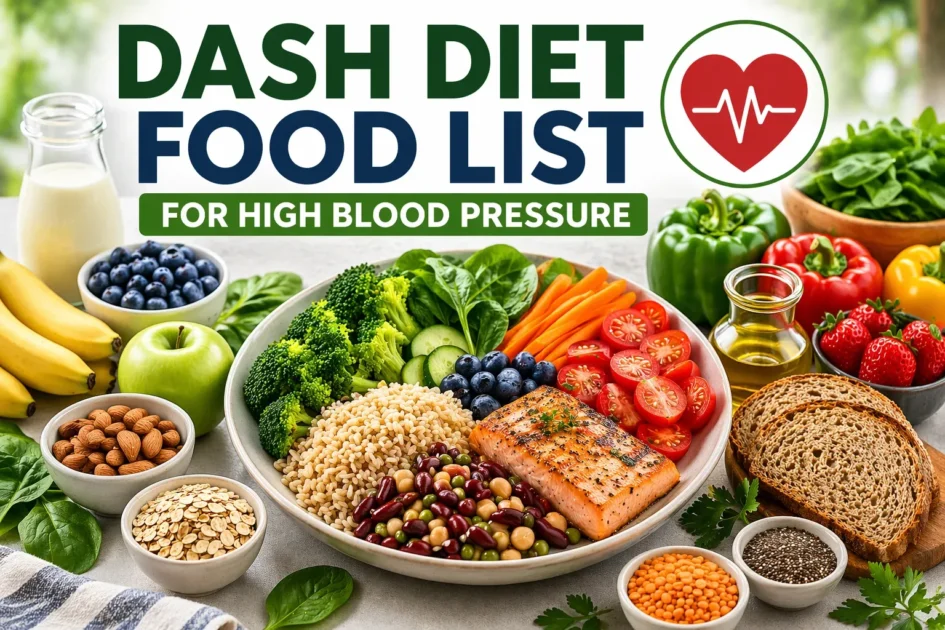
The DASH diet food list for high blood pressure is simple: eat more vegetables, fruits, beans, whole grains, unsalted nuts, low-fat dairy, and lean protein. Eat less sodium, processed foods, sugary drinks, and foods high in saturated fat. DASH stands for Dietary Approaches to Stop Hypertension. The National Heart, Lung, and Blood Institute explains that it was created specifically to help lower blood pressure.
It’s a big reason DASH keeps coming up when people ask what they should actually eat for hypertension. It gives you a full eating pattern, not random food tips. If you want the wider foundation behind this approach, Best Diet for High Blood Pressure: Foods to Eat, Foods to Avoid, and Daily Tips gives the broader framework.
Click to Jump
DASH Diet Food List at a Glance
If you want the short version, build most of your meals around these foods:
Eat more often:
- vegetables
- fruits
- beans, lentils, and peas
- whole grains
- low-fat or fat-free dairy
- fish and skinless poultry
- unsalted nuts and seeds
Limit more often:
- processed meats
- instant noodles
- salty snacks
- fast food
- canned soups and packaged sauces
- sugary drinks
- pastries and heavily processed desserts
- foods high in saturated fat
This pattern helps because it increases nutrients like potassium, magnesium, calcium, and fiber while cutting back on sodium and heavily processed foods. The Mayo Clinic and the NHLBI both describe DASH as one of the most proven eating plans for lowering blood pressure.
What Is the DASH Diet?
The DASH diet is a heart-healthy eating pattern designed for people with high blood pressure or for people who want to reduce their risk of developing it. It focuses on foods that naturally support blood pressure control instead of relying on one “miracle” food.
This distinction is important. Many people look for one fruit, one drink, or one supplement that will fix the problem. DASH works differently. It improves the overall pattern of what you eat day after day. This usually works better than chasing one “healthy” food while the rest of the diet stays full of sodium and ultra-processed meals.
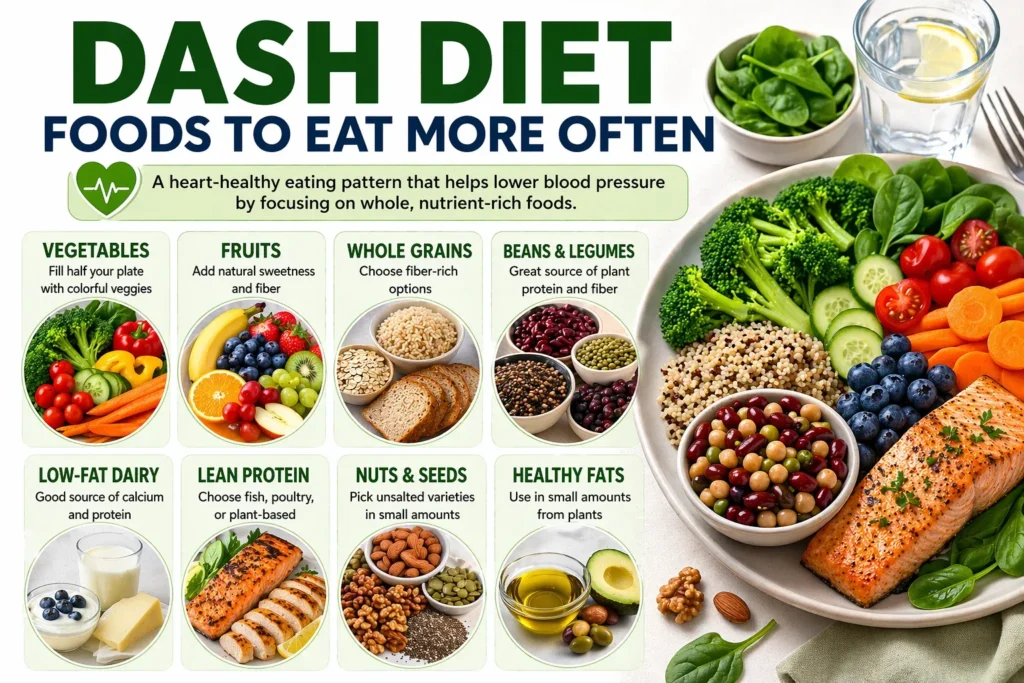
What to Eat More Often on the DASH Diet
1. Vegetables
Vegetables are one of the foundations of DASH. They add fiber, potassium, and magnesium without loading your diet with sodium when you buy them fresh or choose frozen versions without salty sauces. Good options include spinach, kale, carrots, tomatoes, cucumbers, cabbage, okra, broccoli, green beans, bell peppers, and sweet potatoes.
If you’ve already read Foods That Help Lower Blood Pressure Naturally, you’ll notice many of the same foods here. This overlap is a strength, not a problem. The foods that support blood pressure best tend to show up again and again because they’re part of the same evidence-based eating pattern.
2. Fruits
Fruits are another major part of DASH. They can help you eat more potassium and fiber while making it easier to cut back on sugary snacks and heavily processed foods. Good options include bananas, oranges, apples, berries, pears, melon, pawpaw, and avocado.
If you want to go deeper into the potassium side of the diet, Potassium-Rich Foods for High Blood Pressure: What to Eat More Often fits very naturally with this topic and helps you choose the foods that support this part of the plan more deliberately.
3. Whole Grains
DASH includes grains, but it leans toward whole grains more often than refined ones. Better options include oats, brown rice, whole wheat bread, whole grain pasta, millet, and other minimally refined grains. Whole grains can help with fullness, fiber intake, and overall diet quality.
That doesn’t mean you can never eat white rice or white bread. It means refined grains shouldn’t dominate your plate at every meal. One of the easiest ways to improve a blood pressure diet is to stop building meals around mostly refined starch and then adding only a token amount of vegetables.
4. Beans, Lentils, and Peas
Beans and other legumes fit DASH very well. They provide fiber, plant protein, and minerals that support heart health. Good examples include black beans, brown beans, kidney beans, lentils, chickpeas, and peas.
They also solve a practical problem: they make healthy meals easier and cheaper. A plate built around beans, vegetables, and a whole grain is usually a better everyday choice than a salty instant meal, processed meat sandwich, or fast food combo.
5. Low-Fat or Fat-Free Dairy
DASH includes low-fat or fat-free dairy because it provides calcium and protein without as much saturated fat as full-fat versions. Good choices include low-fat milk, plain yogurt, and low-fat cheese in moderate amounts.
Some people don’t tolerate dairy well, and others avoid it for personal reasons. If that’s you, the bigger lesson still stays the same. Build meals around nutrient-dense foods and keep saturated fat and sodium under control.
6. Lean Protein
Lean protein is part of DASH, but it shouldn’t crowd out everything else on the plate. Fish, skinless poultry, and modest portions of lean meat can fit well. Plant proteins like beans and lentils also help here, especially if you’re trying to reduce processed meat.
A lot of people think they’re eating well because they focus on protein, but blood pressure diets are not just about protein. If the meal is still salty, heavily processed, and low in vegetables, it may not help much.
7. Unsalted Nuts and Seeds
Nuts and seeds can fit the DASH diet in moderate amounts. Almonds, walnuts, peanuts, sunflower seeds, and pumpkin seeds are common examples. The key is to choose unsalted versions most of the time.
This is where labels matter. A food can look healthy and still carry a lot of sodium if it’s salted, flavored, or heavily processed, which is why the American Heart Association warns that much of the sodium people eat comes from packaged and prepared foods.
8. Healthier Fats in Small Amounts
DASH doesn’t mean a fat-free diet. It means choosing fats more carefully. Small amounts of healthier fats from nuts, seeds, and plant oils fit better than a routine built around butter, cream, fatty meat, and deep-fried processed foods.
What to Limit on the DASH Diet
1. High-Sodium Foods
This is one of the most important parts of the whole plan. Too much sodium raises blood pressure, and most sodium comes from packaged, processed, prepared, and restaurant foods, not just from the salt shaker. This includes instant noodles, packaged soups, processed meats, salty snacks, fast food, canned foods with added salt, seasoning-heavy mixes, and many bottled sauces, as the American Heart Association explains.
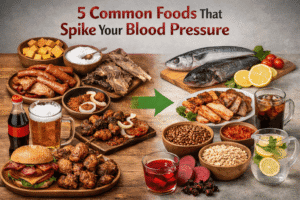
It’s also where 5 Common Foods That Spike Your Blood Pressure becomes handy. Many foods raise blood pressure quietly through sodium, even when they don’t taste especially salty.
2. Processed Meats
Bacon, sausage, hot dogs, deli meat, and similar foods are usually poor choices for people with high blood pressure. They’re often high in sodium and may also be high in saturated fat.
3. Fast Food and Restaurant Meals
Fast food and restaurant meals can be tricky because they often contain more sodium than you expect. Even meals that sound healthy can still be loaded with salt, sauces, dressings, and processed ingredients.
This doesn’t mean you can never eat out. It means you should be more selective. Simpler meals usually work better than heavily seasoned or fried ones.
4. Salty Condiments and Add-Ons
Soy sauce, bouillon cubes, seasoning packets, salty spice blends, ketchup, canned gravies, bottled sauces, and many marinades can drive sodium up quickly. This is one of the easiest mistakes to miss because people often focus only on the main food and forget what gets poured on top of it.
You don’t have to settle for bland meals, though. Herbs, garlic, onions, pepper, lemon, ginger, and other salt-free flavorings can help food taste good without leaning so heavily on sodium, which is one of the practical strategies recommended by the American Heart Association.
5. Sugary Drinks and Sweets
Sugary drinks, pastries, and heavily processed desserts are not the main reason blood pressure rises, but they still make the overall diet worse. They often crowd out more useful foods and can make weight control and overall heart health harder.
6. Foods High in Saturated Fat
Fatty cuts of meat, full-fat dairy, butter-heavy meals, and many ultra-processed snacks should be limited more often on DASH. The goal is not to fear every gram of fat. The goal is to reduce the kinds of fats that work against heart health while improving overall diet quality.
The Best Foods to Build Each Meal Around
One reason people struggle with DASH is that they understand the theory but don’t know how to build a real meal. A simple fix is to think in meal anchors.
For breakfast, build around:
- oats
- plain yogurt
- fruit
- whole grain toast
- unsalted nuts
For lunch, build around:
- vegetables
- beans or lean protein
- brown rice or another whole grain
- low-sodium soups or homemade meals
For dinner, build around:
- a large serving of vegetables
- fish, chicken, or beans
- a whole grain or a starchy vegetable like sweet potato
- little or no salty sauce
This is necessary because many people with high blood pressure don’t actually need a complicated food philosophy. They need a repeatable way to fill their plate.
Foods That Look Healthy but Can Still Be High in Sodium
This is where many people get caught.
Some foods sound healthy because of words like “whole grain,” “protein,” “natural,” “low fat,” or “multigrain.” But that doesn’t automatically make them good for blood pressure. Packaged cereal, flavored yogurt, whole grain crackers, canned soup, bottled salad dressing, veggie chips, breakfast sandwiches, and store-bought wraps can still carry a lot of sodium.
It’s one reason DASH works best when most meals come from basic foods rather than heavily packaged ones. If a food is doing too much work in a factory, it often brings extra sodium with it.
How Much Sodium Should You Aim For?
For many adults, keeping sodium under 2,300 mg a day is a good starting point. Going down to 1,500 mg a day can help even more with blood pressure in many cases. The NHLBI and the American Heart Association both point to these targets for people who want better blood pressure control.
It may sound hard at first, but the biggest gains often come from cutting back on processed foods, fast food, and salty packaged meals. Many people focus too much on the salt shaker and not enough on the foods that already came loaded with sodium.
A Simple DASH Grocery List
Here’s a practical grocery list you can actually use.
Buy more often:
- spinach, cabbage, carrots, tomatoes, cucumbers, broccoli, okra
- bananas, oranges, apples, berries, pears, avocado
- oats, brown rice, whole wheat bread, whole grain pasta
- beans, lentils, chickpeas, peas
- plain yogurt, low-fat milk
- fish, skinless chicken
- unsalted nuts and seeds
Buy less often:
- instant noodles
- processed meats
- salty canned soups
- heavily salted snacks
- fast food
- packaged sauces and seasoning mixes
- sugary drinks
- pastries and heavily processed desserts
Common DASH Diet Mistakes
Thinking one healthy food cancels out a bad overall diet
Some people add bananas, oats, or one salad to their routine and assume they’re now eating for blood pressure. But one good food doesn’t undo a diet that’s still full of sodium, fast food, and processed snacks.
Ignoring the sodium in sauces, packets, and seasonings
This is one of the biggest hidden problems. A meal may look fine until the salty sauce, cubes, seasoning packets, and bottled add-ons go on top.
Building meals around protein and starch, then barely adding vegetables
A lot of everyday meals are heavy on meat and refined carbs and very light on vegetables. DASH works better when vegetables and other whole foods stop being side characters and start taking up real space on the plate.
Assuming “healthy” labels always mean blood-pressure friendly
They don’t. Some foods marketed as healthy are still high in sodium. Label reading still matters.
Can the DASH Diet Help if You Also Have Prediabetes?
It often can, because it pushes you toward whole foods, higher-fiber choices, and fewer ultra-processed meals. But if you’re also dealing with blood sugar concerns, you may need to watch portions and carbohydrate balance more closely. What Should I Eat if I Have Prediabetes? Foods to Eat and Avoid gives a better explanation. The two eating patterns overlap in helpful ways, but they are not exactly the same plan.
When to Talk to a Doctor
Talk to a doctor if your blood pressure stays high even though you’re making changes, if your readings keep getting worse. Or if you have symptoms like chest pain, severe headache, shortness of breath, weakness, or vision changes. Food can help a lot, but it isn’t a substitute for medical care when blood pressure is dangerously high.
FAQ
The DASH diet allows foods like vegetables, fruits, beans, whole grains, low-fat dairy, lean protein, and unsalted nuts and seeds. It limits processed foods, salty meals, sugary drinks, and foods high in saturated fat.
Try to limit processed meats, instant noodles, fast food, salty snacks, canned soups, packaged sauces, and other foods that add a lot of sodium to your day.
It’s one of the most recommended diets for high blood pressure because it was designed specifically for that purpose and has strong medical support behind it. It works best when you follow the full pattern, not just one part of it.
Eggs can fit into the DASH diet in sensible amounts. The bigger issue is the overall pattern of what you eat across the day, including sodium, vegetables, whole foods, and saturated fat.
The Bottom Line
The best DASH diet food list for high blood pressure is not about special products. It’s about building most of your meals around vegetables, fruits, beans, whole grains, lean protein, low-fat dairy, and unsalted nuts and seeds, while cutting back on sodium, processed foods, and foods high in saturated fat. That’s what makes DASH practical, proven, and worth following.
Medical disclaimer: This article is for general education and is not a substitute for medical advice. If your blood pressure is very high, hard to control, or affected by kidney disease, heart failure, or another medical condition, speak with your doctor or a registered dietitian before making major diet changes.