Written by: Freda Juliano
Medically reviewed by: Dtn. Victoria Ifeanyichukwu
Last reviewed: April 5, 2026
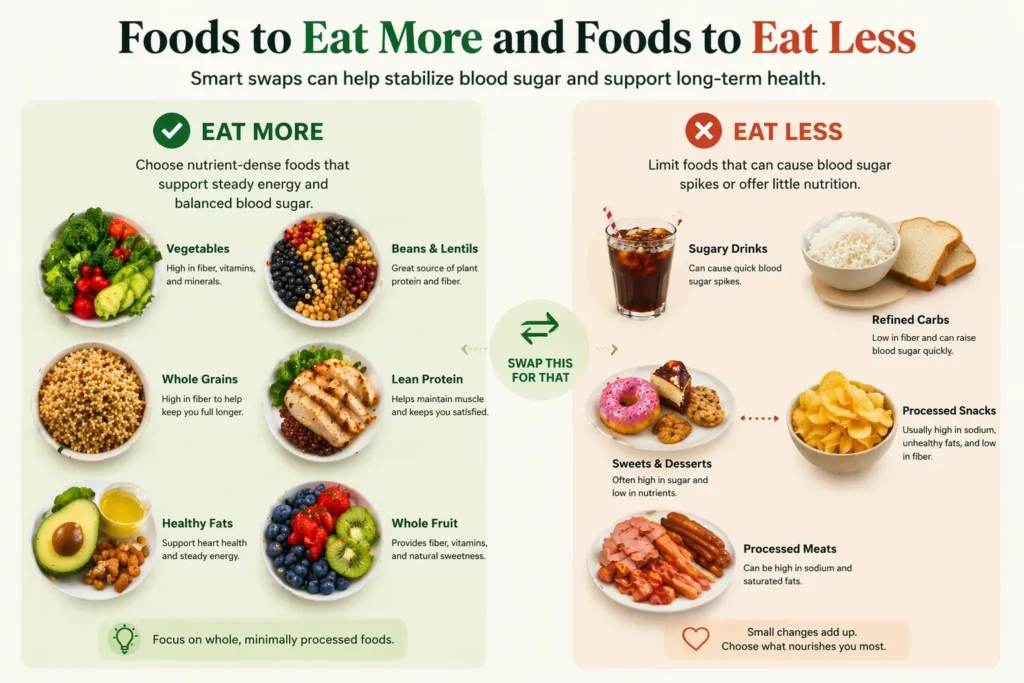
If you have prediabetes, eat more non-starchy vegetables, beans, lentils, whole grains in sensible portions, lean protein, healthy fats, and whole fruit. Eat less sugary drinks, sweets, refined carbs, and heavily processed snack foods. As the CDC explains, steady lifestyle changes can lower the risk of type 2 diabetes, and the food choices you make every day are a big part of that.
Prediabetes means your blood sugar is higher than normal, but not yet in the diabetes range. The good news is that this stage often responds well to better eating habits, more movement, and weight loss when needed. The National Institute of Diabetes and Digestive and Kidney Diseases says those changes can help improve blood sugar and reduce the risk of progression.
Click to Jump
Quick answer: what should I eat if I have prediabetes?
Focus most of your meals on:
- non-starchy vegetables
- beans, lentils, and chickpeas
- whole grains in moderate portions
- lean protein
- healthy fats
- whole fruit
- plain yogurt and other lower-sugar dairy options
Try to cut back on:
- sugary drinks
- sweets and desserts
- refined carbs like white bread and pastries
- highly processed snack foods
- large portions of low-fiber starches
This overall pattern matches what Johns Hopkins recommends for a prediabetes diet: more fiber-rich foods, fewer refined carbs, and less added sugar.
What should I eat if I have prediabetes?
Build most meals around fiber, protein, and better-quality carbs.
This usually looks like vegetables, a solid protein source, and a moderate amount of a higher-fiber carbohydrate. This works better than meals built mostly around white rice, bread, pastries, sugary cereal, or sweet drinks. The general advice from MedlinePlus on diabetes eating supports the same idea: the right foods, in the right amounts, at the right times, can help support healthier blood sugar levels.
You don’t need to cut out all carbs. Most people do better with a more realistic approach. Choose carbs that digest more slowly, keep portions sensible, and pair them with protein, fiber, or healthy fat.
Best foods to eat if you have prediabetes
Non-starchy vegetables
Vegetables should take up a big part of your plate. They add fiber and bulk without raising blood sugar as quickly as refined carbs often do.
Good options include:
- spinach
- cabbage
- okra
- tomatoes
- cucumbers
- carrots
- broccoli
- mushrooms
- bell peppers
- green beans
These foods do more than support blood sugar. Many of them also appear among foods that can help lower blood pressure naturally. They can be useful if you are trying to improve more than one part of your health at the same time.
Beans, lentils, and chickpeas
Beans and lentils are some of the best foods for prediabetes. They give you fiber and protein in the same meal. This helps with fullness and usually slows digestion compared with low-fiber refined starches.
Good choices include:
- black beans
- brown beans
- lentils
- chickpeas
- split peas
They’re also practical. You can use them in soups, stews, salads, rice bowls, and simple side dishes.
Whole grains in sensible portions
Whole grains can still fit into a prediabetes-friendly diet. The key is quality and portion size.
Better options include:
- oats
- brown rice
- barley
- quinoa
- whole wheat bread with good fiber content
Not every food labeled “multigrain” is actually a strong choice. Some still contain a lot of refined flour or added sugar. That’s why it’s important to read the label instead of trusting the front of the pack.
Lean protein
Protein helps balance meals and can help you stay full longer.
Good options include:
- fish
- chicken
- turkey
- eggs
- tofu
- beans
- plain Greek yogurt
- unsweetened yogurt
Try not to build most meals around starch alone. Rice alone, bread alone, or cereal alone usually will not keep you satisfied for long.
Healthy fats
Healthy fats can make meals more satisfying and easier to stick with.
Good choices include:
- avocado
- nuts
- seeds
- olive oil
- natural peanut butter
As MedlinePlus explains in its healthy eating guidance, a more minimally processed eating pattern usually gives you a stronger foundation than one built around packaged convenience foods.
Whole fruit
You can still eat fruit if you have prediabetes. Whole fruit is usually a better choice than juice because it contains fiber and is harder to overconsume quickly.
Good examples include:
- apples
- oranges
- pears
- berries
- guava
A whole apple is not the same as a sweetened fruit drink. The form matters, not just the name of the food.
Plain yogurt and lower-sugar dairy
Plain yogurt, milk, and unsweetened fortified alternatives can fit into a healthy plan. Just be careful with flavored versions, because many contain more added sugar than people expect.
Foods to avoid or limit if you have prediabetes
You do not need to ban every treat forever. But some foods are worth cutting back on because they can raise blood sugar quickly or make healthy eating harder to maintain.
Sugary drinks
This is one of the biggest ones to reduce.
Examples include:
- soft drinks
- sweetened juices
- energy drinks
- sweet tea
- sports drinks
- sugary coffee drinks
Both the CDC’s type 2 diabetes prevention guide and the Johns Hopkins prediabetes diet guide put sugar-sweetened drinks high on the list of foods to cut back on, because they add a lot of sugar without making you feel full.
Refined carbs
These include foods like:
- white bread
- white rice in large portions
- pastries
- sugary cereals
- crackers made mostly from refined flour
- many instant noodle meals
These foods are easier to overeat and usually do less for fullness than higher-fiber options.
Sweets and desserts
Cookies, cakes, candy, donuts, and similar foods are best kept occasional. They are usually high in sugar and low in fiber.
Highly processed snack foods
Packaged snack foods can look small but still bring a lot of refined starch, added sugar, sodium, or calories. Many of them don’t just make blood sugar harder to manage. They also overlap with foods that can spike your blood pressure.
Frequent processed meats
A healthier eating pattern usually puts more focus on beans, fish, poultry, eggs, and other leaner protein choices, while limiting processed meats.
A simple way to build your plate
You don’t need to make eating feel complicated. Use this simple structure:
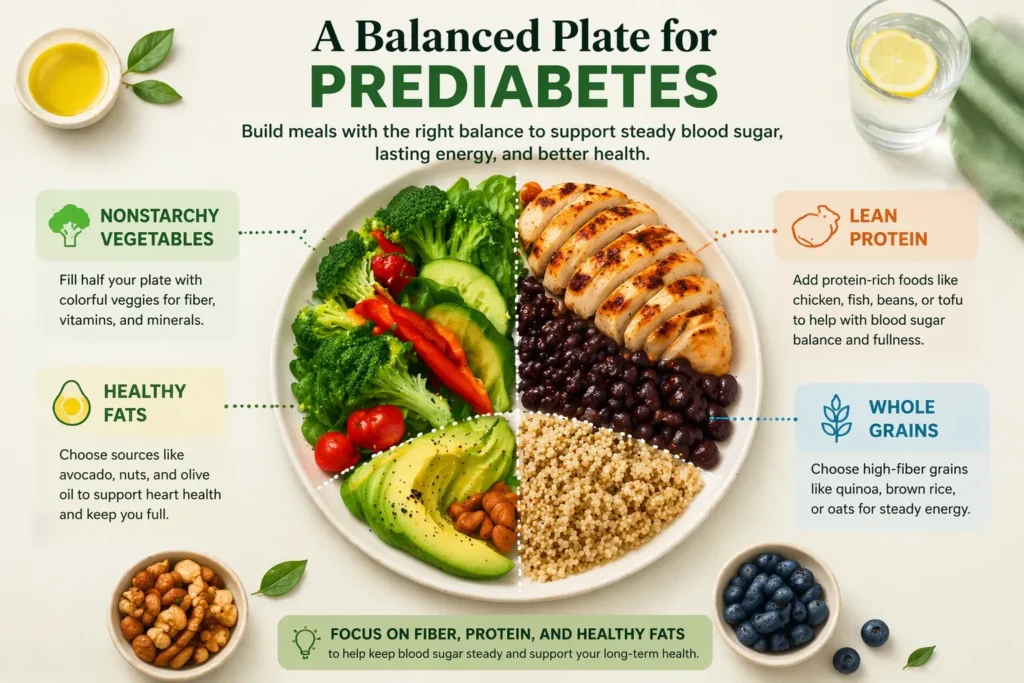
- half your plate: non-starchy vegetables
- one quarter: lean protein
- one quarter: high-fiber carbohydrate or starch
You can add a small amount of healthy fat if needed.
This approach makes meals easier to repeat. It also helps many people manage portions without turning every meal into guesswork. This kind of practical meal planning also fits the balanced approach described in NIDDK’s healthy living guidance.
What people with prediabetes often get wrong about food
They focus only on sugar
Sugar is important, but it’s not the only issue. Large portions of refined starches can also raise blood sugar quickly. A meal built around white bread, white rice, pastries, or low-fiber cereal can still work against your goal even if it doesn’t taste very sweet.
They drink calories without noticing
Many people focus on food and forget what they drink. Sweet beverages can quietly add a lot of sugar during the day.
They trust “healthy” packaged foods too quickly
Granola bars, flavored yogurt, smoothie drinks, and packaged cereals can sound healthy but still contain a lot of added sugar. This is why reading the label is important.
They skip protein and fiber at breakfast
A breakfast built mostly around refined carbs often does not hold up well. Starting the day with protein, fiber, or healthy fat usually makes hunger easier to manage later.
Sample meal ideas for prediabetes
Breakfast
- plain Greek yogurt with berries and nuts
- eggs with vegetables and one slice of whole-grain toast
- oatmeal with chia seeds and a spoon of peanut butter
Lunch
- grilled chicken salad with avocado
- brown rice with beans, vegetables, and fish
- lentil soup with a side salad
Dinner
- baked fish with roasted vegetables and a modest serving of brown rice
- stir-fried tofu with mixed vegetables
- chicken with beans and steamed vegetables
Snacks
- apple with peanut butter
- plain yogurt
- a boiled egg with cucumber
- a small handful of nuts
- carrot sticks with hummus
Each of these examples pairs fiber-rich carbs with protein or healthy fat, which usually helps with fullness and makes meals feel more balanced. Many of these same habits also fit the best diet for high blood pressure, especially when you are eating more vegetables, beans, and minimally processed foods.
Should I cut out carbs completely?
No. Most people with prediabetes do better with a balanced approach, not a zero-carb one.
The better strategy is:
- better carbs
- better portions
- better meal balance
Whole grains, beans, fruit, vegetables, and dairy can still fit into a healthy eating pattern. The bigger issue is usually sugary drinks, sweets, refined grains, and oversized portions of low-fiber starches.
Can losing weight help prediabetes?
Yes. If you have overweight or obesity, even modest weight loss can help lower the risk of progressing to type 2 diabetes. On its prediabetes and insulin resistance page, NIDDK notes that losing 5% to 7% of starting body weight helped reduce diabetes risk in high-risk adults. Johns Hopkins also explains that even a relatively small amount of weight loss can help lower blood sugar.
This doesn’t mean crash dieting. The goal is to build habits you can keep.
When to see a doctor
See a healthcare professional if you have prediabetes and don’t know how to adjust your diet, especially if you also have high blood pressure, high cholesterol, kidney disease, or another condition that affects what you should eat.
Prediabetes often has no obvious symptoms, so follow-up still matters even when you feel fine.
The bottom line
If you have prediabetes, eat more vegetables, beans, lentils, whole grains in sensible portions, lean protein, healthy fats, and whole fruit. Eat less sugary drinks, refined carbs, sweets, and highly processed snacks. You don’t need a perfect diet. You need one you can repeat.
Medical disclaimer: This article is for educational and informational purposes only and is not a substitute for personal medical advice. If you have prediabetes or concerns about your blood sugar, speak with a qualified healthcare professional or registered dietitian for advice tailored to your needs.