Written by: Freda Juliano
Medically reviewed by: Dtn. Victoria Ifeanyichukwu
Last reviewed: April 23, 2026
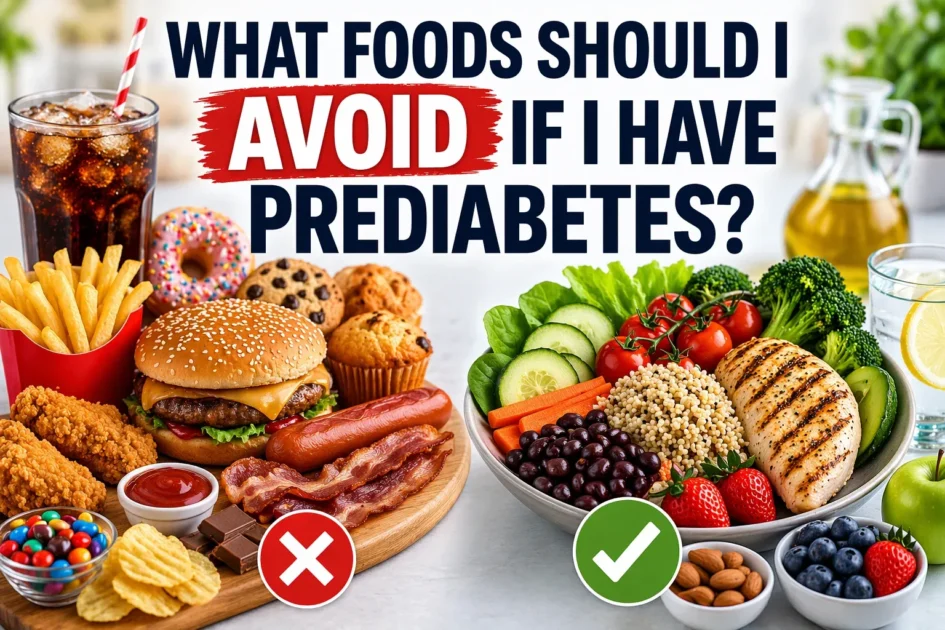
If you have prediabetes, the main foods to avoid are sugary drinks, sweets, refined carbs, heavily processed snacks, fried fast foods, and processed meats. These foods can raise blood sugar quickly, make you feel less full, and make it harder to build a steady eating pattern. As the CDC explains in its diabetes meal-planning guidance, it’s important to eat fewer added sugars and refined grains and focus more on whole foods.
You do not need a perfect diet. You also do not need to fear every carb. But if your usual routine is built around soda, sweet snacks, white bread, fast food, and highly processed convenience meals, that’s the pattern to change.
Click to Jump
Quick list: foods to avoid or cut back on with prediabetes
If you want the short version, limit these foods first:
- sugary drinks like soda, sweet tea, energy drinks, and sweetened coffee drinks
- candy, pastries, cakes, cookies, and other sugary desserts
- refined carbs like white bread, white rice, regular pasta, and many sugary cereals
- chips, packaged snack foods, and ultra-processed convenience foods
- fried fast foods
- processed meats like bacon, sausage, hot dogs, and many deli meats
This is in accordance with guidance from Johns Hopkins on prediabetes diet choices, which highlights sugary beverages, refined carbs, and unhealthy fats as foods worth limiting.
Why these foods are a problem
Prediabetes is not just about avoiding table sugar. It’s also about cutting back on foods that digest fast, fill you up poorly, and make overeating easier. The American Diabetes Association notes that foods high in simple carbs, fat, and calories can have a bigger effect on blood glucose, especially when they become part of your usual routine.
That’s why some foods are more of a problem than others. They do not just add carbs. They often add quick carbs, low fiber, low fullness, and extra calories all at once.

1. Sugary drinks
Sugary drinks are one of the clearest things to cut back on. This includes soda, sweetened fruit drinks, sports drinks, energy drinks, sweet tea, and many coffee drinks loaded with syrup or sugar. They add fast-digesting carbs without much fullness, so they can raise blood sugar quickly and make it easier to take in more calories than you realize. Both the CDC’s healthy-carb guidance and Johns Hopkins’ prediabetes diet article support limiting sugary beverages for this reason.
Even drinks that sound healthier can still work against you. Fruit drinks are not the same as whole fruit. Whole fruit comes with fiber. Sugary drinks usually don’t. If soft drinks and packaged beverages are a regular part of your day, cutting back here can improve more than blood sugar alone.
2. Sweets and desserts with lots of added sugar
Candy, donuts, pastries, cakes, cookies, and similar desserts are foods to cut back on if you have prediabetes. They often combine added sugar with refined flour and extra calories, which makes them easy to overeat and less helpful for steady blood sugar. Johns Hopkins lists cakes, cookies, candy, and sugary snacks among foods to limit, and the ADA encourages eating patterns you can actually sustain over time.
It doesn’t mean dessert is banned forever. It means dessert should be occasional, not automatic. A daily “small treat” can still keep your eating pattern built around sugar instead of balanced meals.
3. Refined carbs
White bread, white rice, regular pasta, many crackers, and many breakfast cereals are worth cutting back on. These foods usually have less fiber than whole-grain versions, and fiber helps with fullness and steadier blood sugar. The CDC explains that fiber supports healthy eating for diabetes prevention and management. While Johns Hopkins specifically recommends limiting refined carbs such as white bread, white rice, and white pasta.
This does not mean you have to ban bread or rice forever. It means refined carbs should stop dominating your plate. A meal centered on a large portion of low-fiber starch with very little protein, vegetables, or healthy fat usually doesn’t keep you full for long. Our guidance on what should I eat if I have prediabetes will help you see what a better-balanced plate looks like in practice.
4. Highly processed snack foods
Chips, packaged sweets, sugary granola bars, and other ultra-processed snack foods can work against your goals. They’re often high in refined carbs, added sugar, unhealthy fats, salt, or some mix of all three. They also tend to be easy to eat quickly without feeling full for long. The CDC’s meal-planning page recommends focusing more on whole foods instead of highly processed ones.
This is one reason “healthy-looking” packaged foods can still trip people up. Some cereals, flavored yogurts, snack bars, bottled teas, sauces, and dressings seem mouth-watering but still contain more sugar or refined starch than people expect.
5. Fried foods and deep-fried fast food
Fried foods and deep-fried fast food are also worth cutting back on. They’re not just a blood sugar issue. Prediabetes often overlaps with weight gain, insulin resistance, and higher cardiovascular risk. So eating deep-fried and heavily processed foods often can pull you farther from the kind of eating plan that actually helps. Johns Hopkins’ prediabetes diet advice recommends limiting saturated and trans fats as part of healthier food choices.
You do not need every meal to be low-fat. But there’s a real difference between healthier fats in foods like nuts, seeds, avocado, and olive oil and foods built around deep frying and refined ingredients. This is also helpful if you’re asking about best diet for high blood pressure.
6. Processed meats
Processed meats such as bacon, sausage, hot dogs, and many packaged deli meats are also great to limit. They’re often heavily processed, easy to pair with refined carbs, and not very helpful if your goal is a stronger long-term eating plan. Johns Hopkins’ broader healthy-diet guidance includes processed meat among foods worth avoiding more often.
If these foods show up once in a while, then it’s not the whole issue. The real problem is when processed meats and convenience foods become part of your everyday routine.
7. Sugary alcohol mixers and heavy drinking patterns
Alcohol is not automatically off-limits for everyone with prediabetes, but it’s helpful to be careful. Sugary mixers can add a lot of fast carbs, and heavy drinking can make food choices worse in the moment. The NIDDK’s diabetes-prevention guidance focuses on lifestyle changes that work long term, which is a much better approach than trying to “fix” an unhealthy plan later.
Foods that seem healthy but can still be a problem
Some foods sound healthy but can still work against you if you eat them often or in large amounts. Common examples include:
- flavored yogurt with lots of added sugar
- sugary granola or granola bars
- sweetened oatmeal packets
- breakfast cereals with more sugar than fiber
- smoothies made with juice or syrup
- bottled teas and “healthy” drinks with lots of sugar
- sauces and dressings that quietly add sugar to meals
Johns Hopkins repeatedly stresses limiting added sugars and refined carbs. It’s the reason these foods deserve a closer look even when the packaging sounds healthy.
Better swaps to make instead
| Instead of | Try |
|---|---|
| Soda or sugary juice drinks | Water, sparkling water, or unsweetened tea |
| Sweet pastries or candy | Greek yogurt, nuts, fruit, or a smaller planned treat |
| White bread | Whole-grain bread with more fiber |
| Sugary cereal | Plain oats or a lower-sugar, higher-fiber cereal |
| Chips every day | Nuts, roasted chickpeas, or sliced vegetables with dip |
| Fried fast food meals | Grilled, baked, or home-cooked meals with protein and vegetables |
| Processed meats | Eggs, beans, fish, chicken, or less-processed protein choices |
What should you eat instead?
The better question is not only “what should I avoid?” It’s also “what should replace it?”
A stronger eating plan usually looks like this:
- half your plate from non-starchy vegetables
- one quarter from lean protein
- one quarter from higher-fiber carb foods such as beans, fruit, brown rice, or whole grains
Both the ADA’s Diabetes Plate method and NIDDK’s healthy-living guidance use this kind of plate structure.
The same shift toward more whole foods and fewer ultra-processed foods also applies in foods that help lower blood pressure naturally if you’re trying to improve your blood pressure as well. And if you want more ideas for foods that support a better overall pattern, potassium-rich foods for high blood pressure points to a clearer direction.
Do you need to cut out all carbs?
No. You do not need to cut out all carbs if you have prediabetes. The real issue is the type of carb, the amount, and what you eat with it. The CDC says carbs are an important part of a healthy diet and that the goal is to choose carbs with fiber and nutrients. The ADA and NIDDK both support balanced meal planning rather than blanket carb fear.
High-fiber carbs usually work better than low-fiber refined carbs. Pairing carbs with protein, vegetables, or healthy fat can also help meals feel steadier and more filling.
A simple way to think about it
When you’re standing in the kitchen or at the store, ask:
- Is this mostly sugar or refined starch?
- Is this heavily processed?
- Will this keep me full, or will I want more food again very soon?
- Does this have fiber, protein, or real nutritional value?
You do not need to obsess over every bite. But those questions can help you spot the foods most worth cutting back on.
When to talk to a doctor or dietitian
Prediabetes is a warning sign, but it’s also a chance to act early. The NIDDK says people with prediabetes can lower their chance of developing type 2 diabetes through lifestyle changes that work long term. The ADA’s prediabetes guidance also points toward structured prevention support.
Talk to a doctor or registered dietitian if you’re not sure how to change your meals, if you also have high blood pressure or high cholesterol, or if you want a plan that fits your culture, budget, and routine.
Quick answers
What are the worst foods for prediabetes?
Sugary drinks, sweets, refined carbs, heavily processed snack foods, fried fast foods, and processed meats are some of the main foods to reduce if you have prediabetes.
Can I still eat rice if I have prediabetes?
Yes, but large portions of refined white rice should not be the default. Higher-fiber carb choices and more balanced meals usually work better.
Do I need to stop eating sugar completely?
No. The goal is not perfection. The goal is to reduce added sugar and stop building your routine around sugary foods and drinks.
Is fruit bad for prediabetes?
No. Whole fruit is not in the same category as soda, candy, or sugary desserts. The ADA’s plate method and NIDDK’s healthy-living guidance both include fruit as part of a balanced eating pattern.
The bottom line
If you have prediabetes, the foods to avoid most are sugary drinks, sweets, refined carbs, heavily processed snacks, fried fast foods, and processed meats. You do not need a fear-based diet. You need a better everyday plan. Start by cutting back on the foods that do the least for your health and make more room for vegetables, protein, fiber-rich carbs, and whole foods. That is the kind of shift that can actually last.
Medical disclaimer: This article is for educational purposes only and is not a diagnosis or personal medical advice. If you have prediabetes or think you might, talk to a qualified healthcare professional for guidance specifically for you.